Organic Turba: The Fulvic Acid Peat Therapy Your Clients Can't Get Anywhere Else.
Organic Turba:
The Fulvic Acid Peat Therapy
Your Clients Can't Get Anywhere Else.
Scalp treatment services grew +9% in 2025 and are projected to grow another 15% in 2026. Clients are paying a premium for results-driven, clinical in-center experiences they can't replicate at home. Organic Turba — now exclusive to the certified center network — is exactly that. Here's the full clinical science behind why.
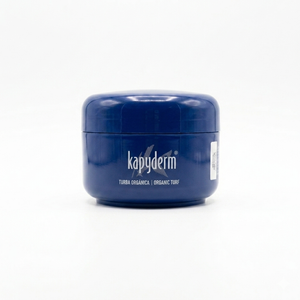
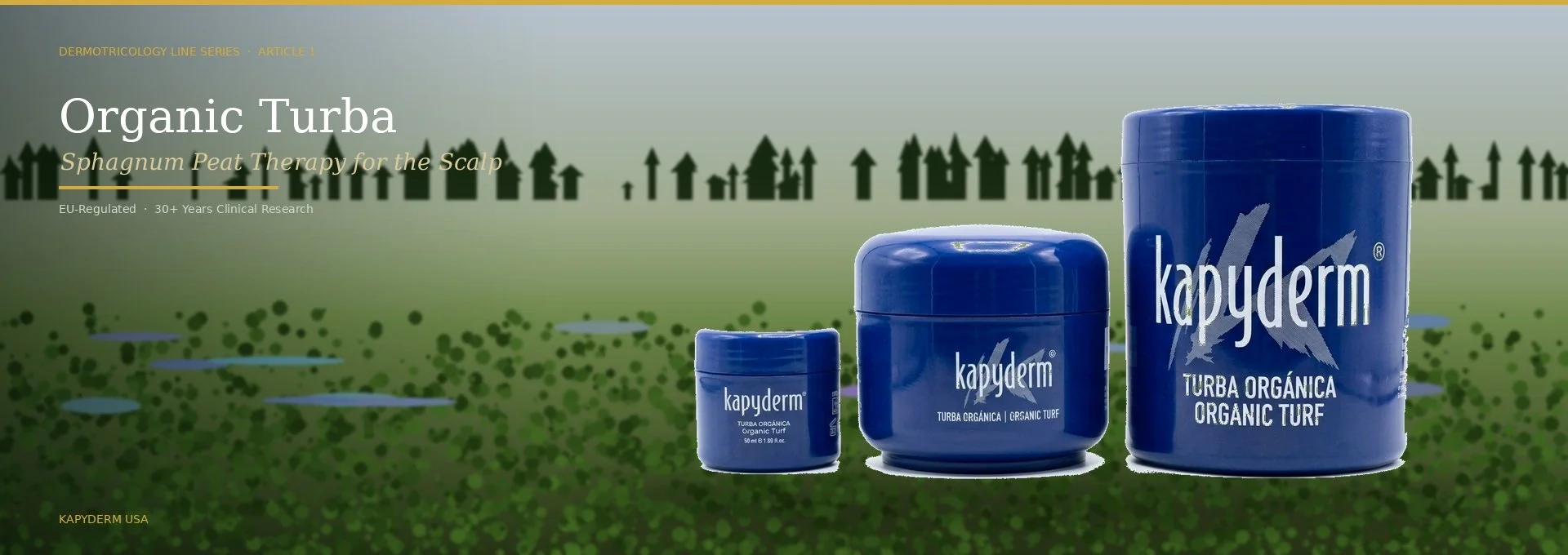
Organic Turba is Kapyderm's best-selling in-center treatment and the foundational first step of nearly every Dermotricology protocol. A naturally occurring bog peat — not a formulated clay or mud mask — it delivers fulvic acid, humic acid, Fraction 14 humic compounds, organic carbon, tannin, and plant-derived phytofolliculins in the proportions they occur together in nature. Sourced from protected European peat bogs under EU regulatory oversight. Now exclusive to the certified center network — not available at retail.
- The market opportunity Organic Turba positions you to capture
- What Organic Turba actually is — and what it isn't
- The chemistry: Fraction 14, fulvic acid, and why peat is different
- Peat vs shilajit — the comparison your clients will ask about
- The four actives that complete the formula — salicylic acid, sulfur, urea, potassium iodide
- The clinical properties — what the product documentation confirms
- Protocol decision tree — when to use which combination
- How to explain Organic Turba to your clients
- Why Organic Turba is now exclusive to the professional network
- EU sourcing and regulatory context
- Frequently asked questions
The Market Opportunity Organic Turba Positions You to Capture
Before getting into the chemistry, the market context is worth stating clearly — because it's why this product matters more for your practice in 2026 than it ever has.
The head spa movement — immersive, clinical scalp rituals combining deep cleansing, exfoliation, steaming, targeted serums, and therapeutic treatment — is scaling fast across the U.S. What clients are paying premium prices for in 2026 is exactly what the Organic Turba protocol delivers: a demonstrably clinical, professionally administered scalp treatment that cannot be replicated from a retail shelf. That's the differentiator. That's the positioning. And it's now locked exclusively to the center network.
What Organic Turba Actually Is — and What It Isn't
Turba is the Spanish word for peat. Organic Turba is naturally occurring organic bog peat — partially decomposed plant matter accumulated over centuries in oxygen-free bog environments. In the Northern European peatlands that supply much of Europe's therapeutic peat, vegetation regenerates at the surface while the lower layers die, compress, and slowly transform over time into the mineral-and-humic-rich substrate used in treatment.[1]
This is a critical distinction for professional context. Organic Turba is not a synthetic clay. Not a mineral mud. Not a formulated product with isolated actives added to a base. It is the whole, naturally occurring botanical substance itself — used directly as the treatment, with its complete biochemical complexity intact. The slow, oxygen-free decomposition process that forms peat is precisely what preserves and concentrates the fulvic acid, humic acid, and trace mineral compounds that make it clinically useful.
Laboratorios Kapyderm's product documentation confirms Organic Turba contains: organic carbon, tannin, phosphorus, mineral salts, sulfate, calcium, fulvic acid, humic acid, and plant-derived nutrients including phytofolliculins — these are traditional descriptors of the biological complexity found in whole therapeutic bog peat.[2] Independent peat chemistry research has identified up to 18 HPLC fractions of water-soluble humic acid compounds in peat — including the compound designated Fraction 14, reported to produce a stimulatory response in tissue.[3]
The Chemistry: Fraction 14, Fulvic Acid, and Why Peat Is Different
The clinical value of peat comes down to its organic acid complex — specifically fulvic acid and humic acid, and the specific fractions within them that have documented biological activity on skin and hair tissue.
A 2024 peer-reviewed review in Cosmetics (MDPI) — Peloids in Skin Care and Cosmeceuticals (Mourelle, Gómez, Legido) — confirms that peat-derived peloids have documented antibacterial, antifungal, immunomodulatory, and photoprotective activity relevant to dermatology and cosmetics. The review specifically notes prior clinical studies supporting peat-based peloid use in seborrheic dermatitis — the same scalp condition Organic Turba targets. Confirmed properties documented across the literature: antimicrobial activity, anti-inflammatory and antioxidant effects, improvement in wound healing, and skin barrier function improvement.[12]
A 2025 study in the International Journal of Biometeorology examining peloid mud therapy in patients with inflammatory conditions found measurable bioregulation of inflammatory and immune responses — including normalized cortisol-cytokine interaction and reduced systemic inflammatory markers.[7] Both studies support the position that peat and mud-derived therapies produce biologically active anti-inflammatory effects — not merely cosmetic or sensory ones. These are the categories of independent science that back the Dermotricology system's clinical positioning.
Peat vs. Shilajit — The Comparison Your Clients Will Ask About
Fulvic acid is one of the fastest-growing searches in hair and skincare — driven largely by shilajit content on TikTok and Instagram. Your clients will ask about it. Here's the professional answer:
| Factor | Shilajit-Derived Fulvic Acid | Organic Turba (Bog Peat) |
|---|---|---|
| Source | Geological rock exudate — compressed ancient organic matter leaking from Himalayan/Altai rock formations | Living peat bog — continuously regenerating peatland ecosystem, centuries of slow botanical decomposition |
| Fulvic acid form | Isolated or partially isolated — often extracted and added to a supplement or serum base | Whole substance — fulvic acid present in its naturally occurring context alongside humic acid, Fraction 14, tannin, minerals |
| Quality control | Variable by source and supplier — third-party COA testing is the only reliable check | Single manufacturer, single documented supply chain, EU cosmetic manufacturing standards |
| Heavy metal risk | A documented concern in this category — FDA has advised consumers against a specific fulvic acid supplement over elevated lead and arsenic[6] | EU-regulated sourcing under Habitats Directive 92/43/EEC — controlled collection, and a rinse-off topical rather than an ingested product[5] |
| Application context | Primarily oral supplement; topical scalp use largely unprotocoled | Professional in-center treatment with 35+ years of documented clinical protocol application to scalp and skin |
| Tissue-specific research | Broad systemic research (gut, cognitive); limited scalp-specific data | Peat hair treatment research reports a Fraction 14 tissue stimulatory response specific to hair and scalp application[3] |
Shilajit is a geological rock exudate sold mainly as an oral supplement, in a category where heavy metal contamination has drawn an FDA consumer advisory. Organic Turba is an EU-regulated botanical peat with 35+ years of documented clinical scalp protocol use, delivering fulvic acid in its whole, naturally occurring context — applied topically as part of a professional treatment rather than swallowed.
The Four Actives That Complete the Formula
The peat is the foundation. But Organic Turba is not pure peat — it is a professionally formulated treatment that adds four specific actives to the peat base. These are not cosmetic additions. Each addresses a specific aspect of the scalp or skin condition the Turba step is designed to resolve.
A beta-hydroxy acid (BHA) with confirmed keratolytic and anti-inflammatory properties. During the 20-minute contact period, salicylic acid dissolves the bonds between dead skin cells and the oxidized sebum debris at the follicular opening — the exact material that blocks ampoule and tonic penetration. A 2025 prospective cohort study (Ge et al., Journal of Cosmetic Dermatology) documented 80% overall clinical improvement in moderate-to-severe seborrheic dermatitis with a salicylic acid-based system at 4 weeks (dandruff score 2.45 to 1.10, P < .01).[17] The Turba delivers this keratolytic mechanism as a leave-on mask — with far greater contact time than any wash-off product.
One of the oldest topical dermatological actives in clinical use. NCBI StatPearls seborrheic dermatitis clinical guidelines (updated 2024) explicitly list sulfur as a recognized antimicrobial/keratolytic agent in SD treatment: “Shampoos usually contain combinations of agents such as coal tar (antipruritic/keratolytic), salicylic acid (keratolytic), sulfur (antimicrobial/keratolytic).”[13] Its mechanisms: antimicrobial action against the bacteria and fungi driving seborrheic conditions, sebum-regulation that reduces gland overproduction, and mild keratolytic activity complementing the salicylic acid in the formula. The 20-minute contact time gives sulfur dwell time that no standard wash-off product achieves.
Urea is a hygroscopic molecule present in the skin's natural moisturizing factor (NMF) essential for stratum corneum hydration and integrity. A clinical study of 10% urea foam applied to seborrheic dermatitis and psoriasiform scalp dermatoses produced significant (P < 0.05) decreases in desquamation measures and dryness at both 14 and 29 days — with no adverse reactions.[14] A 2021 review in Dermatology and Therapy confirmed: urea reduces TEWL, increases stratum corneum water retention, upregulates filaggrin and loricrin genes for keratinocyte differentiation, and enhances penetration of co-applied topical actives.[15] In the Turba formula this means urea is doing three things simultaneously during the 20-minute mask: softening and loosening scale, retaining moisture to prevent discomfort from the keratolytic actives, and enhancing the absorption of salicylic acid and the peat's organic acid complex into the stratum corneum.
Potassium iodide contributes to the antiseptic and purifying function of the Turba mask — the same active found in the Dermotricology line's Ampoule N and KN purifying formulas. A 2025 review in the Indian Journal of Dermatology documents potassium iodide's clinical use across a broad range of inflammatory dermatoses — including granuloma annulare, pyoderma gangrenosum, Sweet's syndrome, erythema nodosum, and fungal infections including sporotrichosis and chromoblastomycosis — confirming its established antiseptic, anti-inflammatory and antifungal properties in dermatological practice.[16] Across the Kapyderm Dermotricology line, potassium iodide consistently marks the purifying-phase products — a formulation logic consistent with its documented dermatological role. Professional caution: topical iodide can be absorbed, so avoid the Turba step for clients with a known iodine allergy or thyroid condition, and in pregnancy or breastfeeding, unless cleared by their physician — as a rinse-off 20-minute mask the exposure is low, but the caution is warranted.
Standard wash-off scalp treatments achieve 1–5 minutes of scalp contact before being rinsed. Organic Turba is designed for 20 minutes under steam. That contact window is what allows salicylic acid to penetrate and lift follicular accumulation, sulfur to act on the scalp's microbial environment, urea to simultaneously soften the stratum corneum and enhance penetration of co-applied actives,[15] and the peat's fulvic and humic acid complex to interact with skin tissue. The 20-minute protocol is not a convenience choice. It is the mechanism that makes every active in the formula clinically effective.
The Clinical Properties — What the Product Documentation Confirms
Laboratorios Kapyderm's clinical documentation lists the following properties for Organic Turba. These are the manufacturer's own descriptors — consistent with the independent literature on peat-based dermatological treatments, but sourced from the manufacturer rather than from independent testing:[4]
- Exfoliating — removes dead skin cells and clears the follicle opening
- Decongestant — acts on the deep layers of skin and hair cuticle/cortex
- Oxygenating — supports cellular oxygen availability at the scalp surface
- Antiseptic — supports a clean follicle environment
- Astringent — tightening and toning effect from the tannin component
- Anti-inflammatory — calms irritated scalp tissue
- Tissue-regenerating (cicatrizante) — supports cellular renewal
- Circulation-activating — stimulates blood flow to the treated area
This breadth explains why Organic Turba appears across virtually every Dermotricology protocol regardless of condition — it is not a condition-specific treatment. It is a preparatory and foundational treatment that makes the entire protocol that follows more effective by bringing the scalp to its optimal receptive state.
Protocol Decision Tree — When to Use Which Combination
Organic Turba is rarely used in isolation. The choice of what to combine it with — and when to use it alone — is a clinical decision based on the client's condition, scalp type, and treatment goal. Here is the complete decision framework:
Turba + Balsamic Collagen Emulsion (equal parts)
- Dry, devitalized, or dehydrated scalp types
- K1 scalp conditions requiring deep hydration alongside decongest
- Extension to face, neck, hands, and body — the full hydration protocol
- Clients presenting with general scalp fatigue or first-time in-center treatment
- Maintenance phase protocols for existing clients
Turba + Ampoule KN or N
- Seborrheic dermatitis with significant buildup or follicle congestion
- K2 or oily scalp types where deeper cellular-level exfoliation is the primary goal
- Pre-microneedling preparation to maximize penetration of subsequent Ampoule DT
- Psoriasis or eczema protocols where decongestion precedes targeted anti-inflammatory application
- Intensive phase treatment for thinning conditions with scalp buildup as a contributing factor
Turba alone + small amount of mineral water
- Sensitive or reactive scalp presenting with redness or irritation
- Pediatric protocols or clients with known ingredient sensitivities
- Maintenance-phase treatments where a lighter clinical touch is appropriate
- First in-center session for a new client where the goal is gentle assessment
Seborrheic and inflammatory conditions — oil-first protocol
- For seborrheic dermatitis, dermatitis, or inflammatory scalp conditions, essential oils are applied to the affected areas first per the technician's prescribed protocol
- Organic Turba is then applied over the oil layer — the oil acts as an interface that modulates the peat's astringent action and enhances tolerance on sensitive tissue
- This sequencing is documented in Laboratorios Kapyderm's clinical application guidelines[4]
How to Explain Organic Turba to Your Clients
The most common client question when they see the Turba being prepared: "Why are you putting mud on my head?" Here is a professional framework you can adapt to your own voice:
"The scalp is skin. Just like your face benefits from a professional deep-cleanse treatment before an active serum, your scalp benefits from this peat-based therapy to decongest the follicle openings and prepare for the targeted treatments that follow. What you're seeing is called Organic Turba — it's an organic bog peat from protected European wetlands, not a clay or mud mask. The compounds inside it — called fulvic and humic acids — have been used in European clinical practice for over a century for exactly this purpose."
"You may have seen fulvic acid trending on TikTok recently — usually in connection with shilajit. This is the professional, whole-substance version of those same compounds, but sourced from a regulated European peat bog rather than a geological rock formation, and applied topically as part of a clinical protocol rather than swallowed as a supplement. That difference matters — this is a rinse-off treatment used on the scalp, not something taken internally."
"I'm going to apply it now, add steam for about 15 minutes, then remove it completely. After that your scalp will be in its most receptive state for the targeted treatment that follows. You may notice your scalp feels noticeably cleaner and lighter than after a regular shampoo — that's the decongestant effect working."
If they ask about the scent: "Peat has a naturally earthy scent — no synthetic fragrance is added. It rinses away completely with the emulsification step."
Why Organic Turba Is Now Exclusive to the Professional Network
Organic Turba has been removed from the Kapyderm USA retail store. This is not a supply issue — it is a deliberate positioning decision, and it directly benefits every certified center in the network.
Organic Turba produces its full clinical benefit only when applied correctly as part of a complete Dermotricology protocol — with proper sequencing, appropriate combination product selection, steam, and timing. Applied by someone without Dermotricology training, without the right combinations, without steam, it delivers a fraction of its clinical potential and fails to differentiate from a generic scalp mud available anywhere.
Your clients cannot buy this product. They cannot order it online. They cannot replicate the in-center experience at home. The only way to access Organic Turba is through a certified Kapyderm Treatment Center. In a market where clients are actively searching for premium, results-driven scalp experiences they can't get from retail — this is a genuine, structural competitive advantage. The product's exclusivity is now part of the protocol's value proposition.
EU Sourcing and Regulatory Context
Within the European Union, peat-bog habitats are protected under Council Directive 92/43/EEC (the EU Habitats Directive), which restricts the collection of founder material from natural habitats and requires that commercial peat sourcing be controlled and free of biological contamination.[5]
Laboratorios Kapyderm operates within this protected, regulated European framework — consistent with the same EU cosmetic manufacturing standards (Regulation (EC) No 1223/2009) that govern every Kapyderm formula. This is a meaningfully different regulatory environment than what governs most "natural mud," peat supplement, or clay-based scalp products on the global market — particularly the shilajit and fulvic acid supplement category, where the FDA has advised consumers against a specific fulvic acid product due to elevated lead and arsenic levels.[6]
When you use Organic Turba in your center, you are using a raw material that exists within a sourcing system specifically designed to prevent the over-extraction and contamination concerns that affect unregulated peat and geological exudate markets. That is part of the clinical credibility story you can share with clients who ask about sourcing.
Frequently Asked Questions
- Laboratorios Kapyderm. Turba Orgánica — Product Documentation. Manufacturer product listing.
- Laboratorios Kapyderm. Turba Orgánica — Ingredient Composition. Manufacturer product specification, Spain.
- Basso LA, et al. Peat for Hair Treatment. International Peat Society, 2016. Conference paper — not a peer-reviewed journal article. HPLC analysis reporting up to 18 fractions of water-soluble humic acid compounds in peat extracts; fraction 14 found to have a stimulatory response in tissue; bio-ecological alternatives for scalp treatment via turba-therapy. researchgate.net — Peat for Hair Treatment
- Laboratorios Kapyderm. Turba Orgánica — Properties and Application Protocol. Manufacturer documentation, Spain.
- European Commission. Council Directive 92/43/EEC — Habitats Directive. EUR-Lex 31992L0043
- U.S. Food and Drug Administration. FDA Advises Consumers Not to Use Fulvic Care Powder and Tablets from Black Oxygen Organics Due to Elevated Levels of Lead and Arsenic. December 3, 2021. fda.gov — public health alert
- Ortega-Collazos E, et al. Neuroimmunomodulation Induced by Mud-Bath Therapy. Int J Biometeorol. 2025 Jul 16. doi: 10.1007/s00484-025-02984-7 · PMC12479573
- Kline PRO. The Scalp Care Boom: Are Brands Unlocking Growth from the Root Up? March 2026. Industry market research, not peer-reviewed. Scalp treatment services +9% in U.S. salons Q1–Q3 2025; $40+ avg service price vs $36 for other hair services; 15% growth projected 2026. klinegroup.com
- Wu Y, Lyu T, Shan L. Fulvic Acid Attenuates Atopic Dermatitis by Downregulating CCL17/22 via p38 MAPK and JNK Pathways. Molecules. April 2023;28(8):3507. HaCaT keratinocyte study: fulvic acid reduced CCL17/CCL22 via p38 MAPK/JNK deactivation; DNCB mouse model: topical FA reduced AD symptoms and inflammatory chemokines. PMC10146253 · doi: 10.3390/molecules28083507
- Sabri AH, et al. Humic and Fulvic Acids Poultice on Wound Healing. Journal of Cutaneous and Aesthetic Surgery. 2024. 0.5% humic + fulvic acid poultice: significantly higher wound healing %, fibroblast count, angiogenesis vs controls; reduced inflammatory cells; TGF-β/Smads signaling activation. Animal study. PMC11126228
- Klucakova M, et al. Biomedical Applications of Humic Substances: A Systematic Review. September 2025. 111-reference systematic review: humic substances scavenge ROS, modulate cytokine production, promote wound healing; antioxidant, anti-inflammatory, antimicrobial and immunomodulatory properties. PMC12466450
- Mourelle ML, Gómez CP, Legido JL. Peloids in Skin Care and Cosmeceuticals. Cosmetics (MDPI). November 2024. Peat-derived peloids: documented antibacterial, antifungal, immunomodulatory, photoprotective activity; prior clinical studies supporting use in seborrheic dermatitis; antimicrobial, anti-inflammatory, antioxidant, wound healing and skin barrier properties. doi: 10.3390/cosmetics11060202
- Elgash M, Dlova N, Ogunleye T, McMichael AJ. Seborrheic Dermatitis. StatPearls, NCBI Bookshelf. Updated March 2024. Clinical treatment guidelines: sulfur listed as recognized antimicrobial/keratolytic agent in SD shampoo formulations alongside salicylic acid. NBK551707
- Celleno L, et al. Urea Cream for Hand Eczema and Urea Foam for Seborrheic Dermatitis and Psoriasiform Dermatoses of the Scalp. November 2022. 10% urea foam on scalp SD/psoriasiform dermatoses (n=20): significant (P < 0.05) decrease in desquamation and dryness at 14 and 29 days; no adverse reactions. PMC9664912
- Piquero-Casals J, et al. Urea in Dermatology: A Review of its Emollient, Moisturizing, Keratolytic, Skin Barrier Enhancing and Antimicrobial Properties. Dermatology and Therapy. 2021. Urea: reduces TEWL, increases stratum corneum water retention, upregulates filaggrin/loricrin/transglutaminase 1, enhances penetration of co-applied topical actives. PMC8611129 · doi: 10.1007/s13555-021-00611-y
- Goel N, Doshi BR. Potassium Iodide in Dermatology: Recent Advances in Mechanism of Action, Preparation, Uses and Adverse Effects. Indian Journal of Dermatology. May–Jun 2025;70(3):169. Documented dermatological use across inflammatory dermatoses and fungal infections; antiseptic, anti-inflammatory and antifungal mechanisms. PMC12139630 · doi: 10.4103/ijd.ijd_508_24
- Ge Y, et al. Prospective cohort study of a salicylic acid-based system in moderate-to-severe seborrheic dermatitis. Journal of Cosmetic Dermatology. 2025. 80% overall clinical improvement at 4 weeks; dandruff score 2.45 to 1.10, P < .01. PMC11705510
17 sources. Note that references 1, 2 and 4 are Laboratorios Kapyderm's own product documentation and are not independent; reference 3 is a conference paper; reference 8 is industry market research. The remainder are peer-reviewed literature or primary regulatory sources. Specific harvest location is proprietary to Laboratorios Kapyderm. Last reviewed August 19, 2026.
Order Organic Turba for Your Center
Available exclusively through the certified Kapyderm center network. Not sold at retail. Contact your Kapyderm USA representative to order.
Order Through Your Rep →Join the Network. Get Exclusive Access.
Organic Turba is one of several professional-exclusive products available only to certified Kapyderm Treatment Centers. Get in touch to find out what certification involves.
Ask About Certification →