Plant-Based Dermotricology Results: 2 Real Cases — Genetic Hair Loss & Stress-Induced Shedding
Plant-Based Dermotricology Results:
2 Real Cases — Genetic Hair Loss & Stress-Induced Shedding
Hair loss is one of the most emotionally charged concerns a person can bring to a professional. It is also one of the most commonly misread — approached with the same limited toolkit regardless of the underlying mechanism. What these two case studies show is a different approach: a plant-based protocol built around the specific drivers of each person's condition rather than a single default option.
These are not marketing composites. They are case records — real clients, real interventions, real photographs — documented by a certified Dermotricology Educator at an authorized Kapyderm USA Treatment Center in Georgia. Two cases are two cases; they are not evidence of what any other person should expect.
The initial presentation
When this client first came to the practice, the picture was familiar. The crown showed a wide, exposed part line with the scalp clearly visible beneath sparse coily hair. The thinning followed the characteristic female androgenetic pattern — concentrated at the top of the scalp, spreading from the part line outward. Despite her hair's natural density and curl pattern, the crown exposure was significant and distressing.
In androgenetic alopecia, DHT — produced when the 5-alpha reductase enzyme converts testosterone to dihydrotestosterone — progressively miniaturizes genetically susceptible follicles. Without intervention, miniaturization continues until the follicle can no longer produce a visible hair. The window in which scalp-side support can still make a difference is while follicles are miniaturized but not yet scarred, which is where this client presented.
Before — baseline crown assessment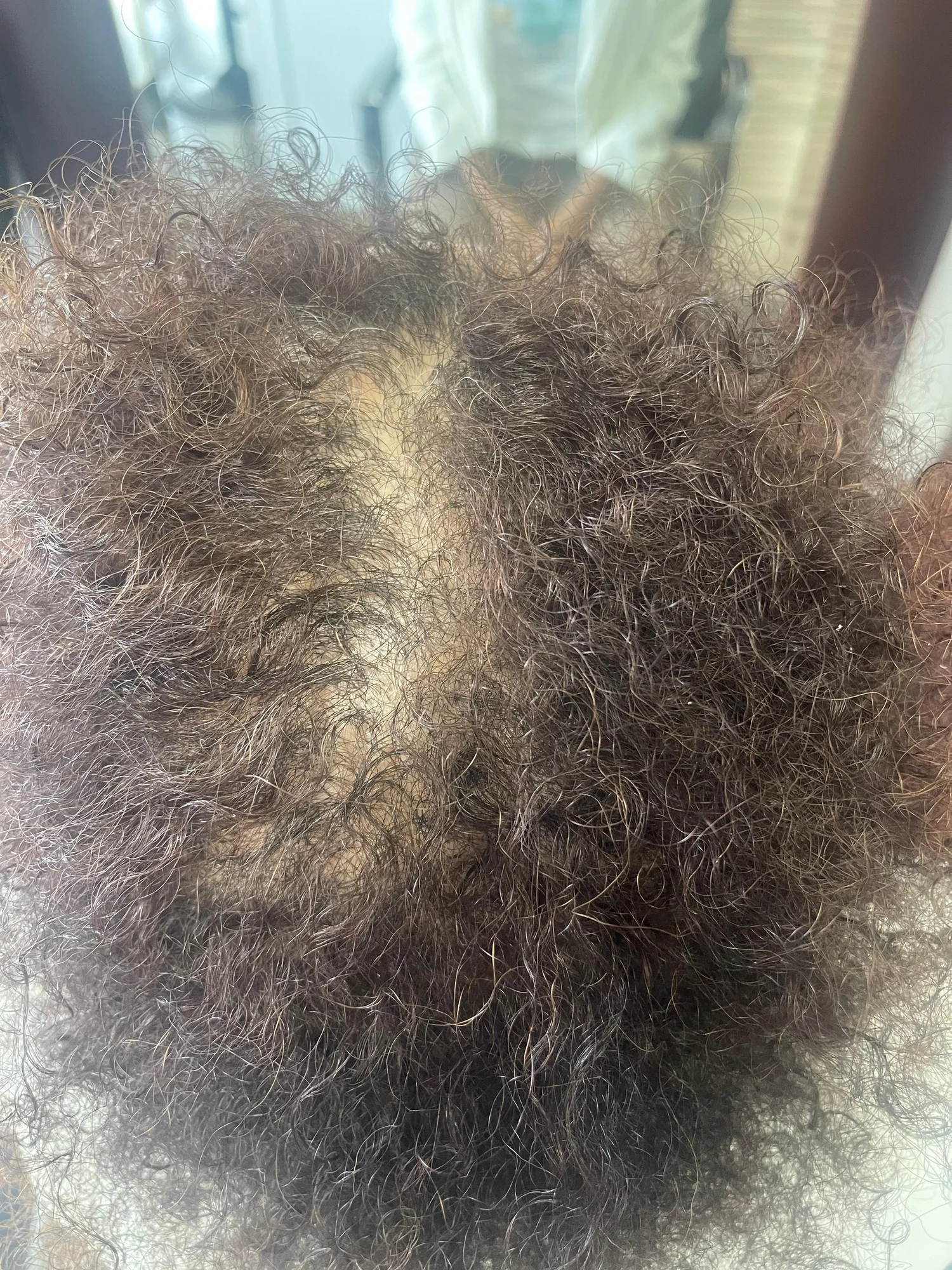
The 16-week protocol
The 16-week protocol addressed three factors at once: DHT-mediated follicle miniaturization, nutritional depletion at the follicle matrix, and the scalp environment that compounds both. Professional dermapuncture was central to the in-center component, creating microchannels that increase how much of the applied botanical actives reaches below the scalp surface rather than sitting on top of it.
- In-Center Treatment: Professional dermapuncture to improve delivery of topical actives toward the follicle matrix, rather than leaving them on the scalp surface
- Active Compound Application: 50% Organic Turba and 50% Collagen blend — applied as a thermal treatment mask to draw out follicular congestion and support cellular renewal at the scalp
- Microcirculation Support: ½ Ampoule N — formulated to support local microcirculation and the delivery of oxygen and nutrients to the follicle
- Scalp Microbiome: Fungi Activ — botanical tonic used to support a balanced scalp microbiome and reduce the scalp irritation that compounds miniaturization
- Home Care: Ampoule DT (Alchemy of DT) applied at home between sessions
- Home Care: Alogenic Tonic — applied daily to thinning zones between center visits
- Internal Support: Targeted Kapynatura supplementation for the nutritional gaps that commonly accompany hair thinning
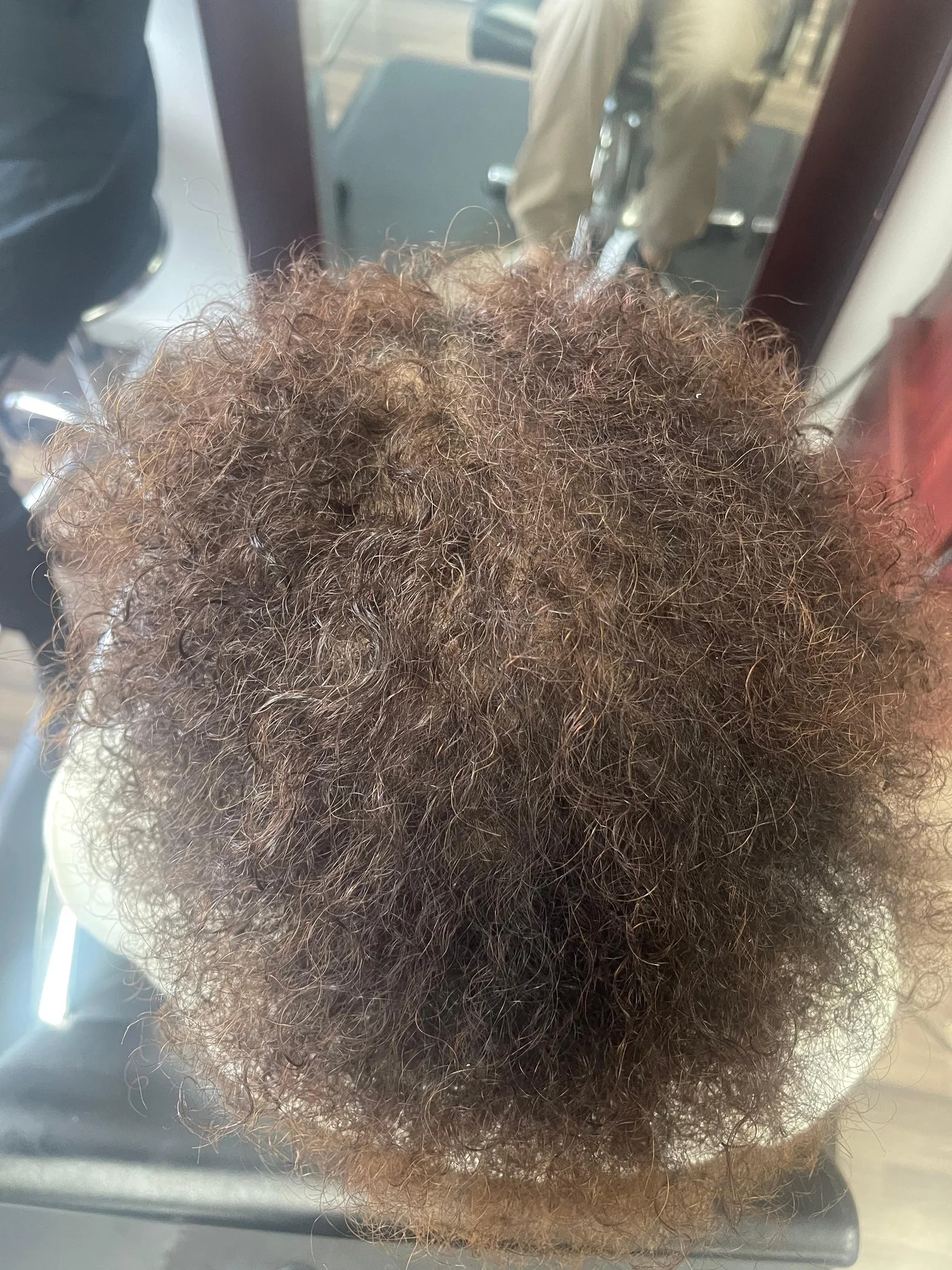
Visible improvement in hair density and scalp coverage at the crown. The wide exposed part line is substantially reduced, with dense coily growth returning to areas that were sparse at baseline. Follicles that were miniaturized but not yet scarred responded to the protocol over the sixteen weeks.
The initial presentation
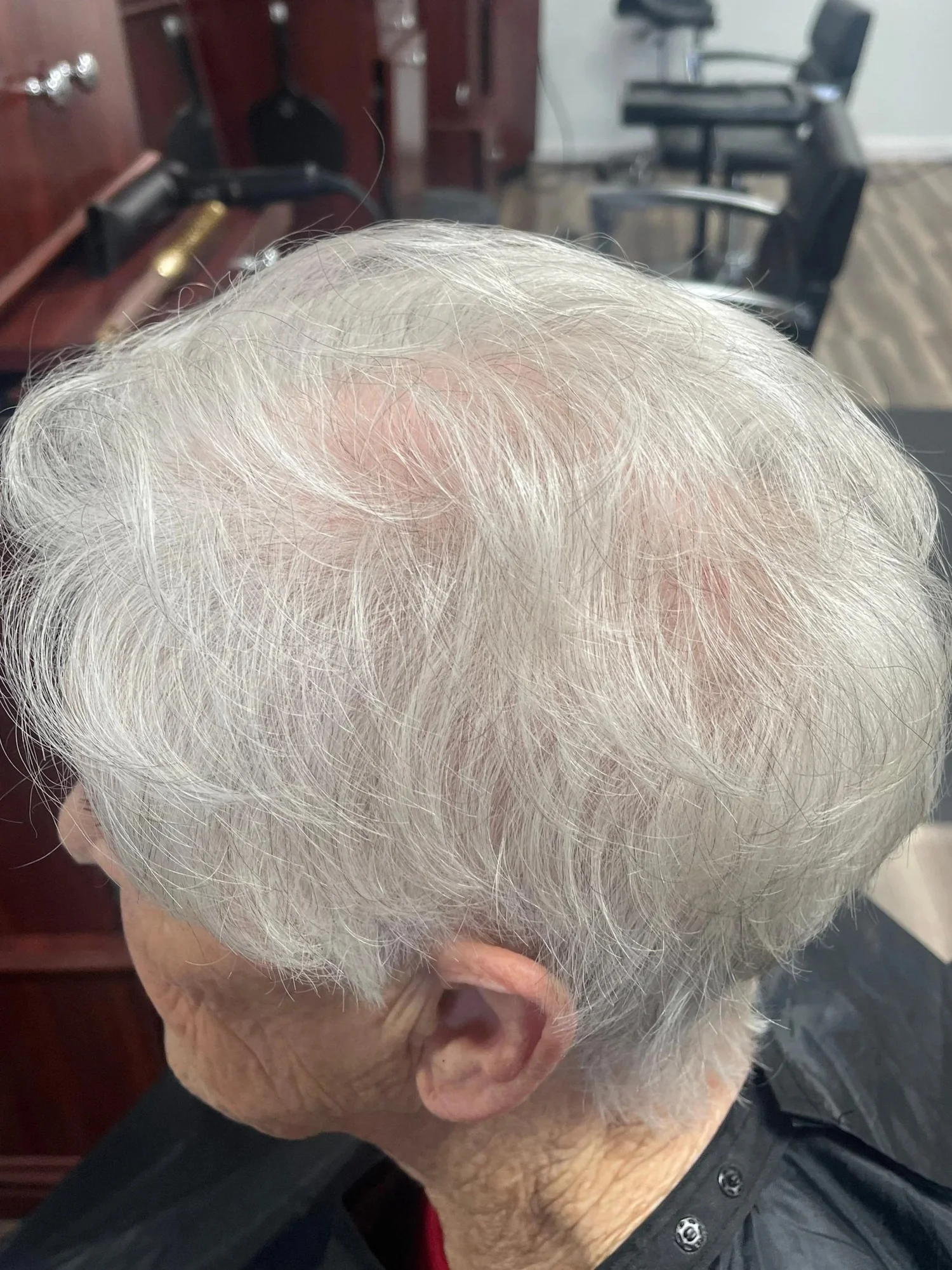
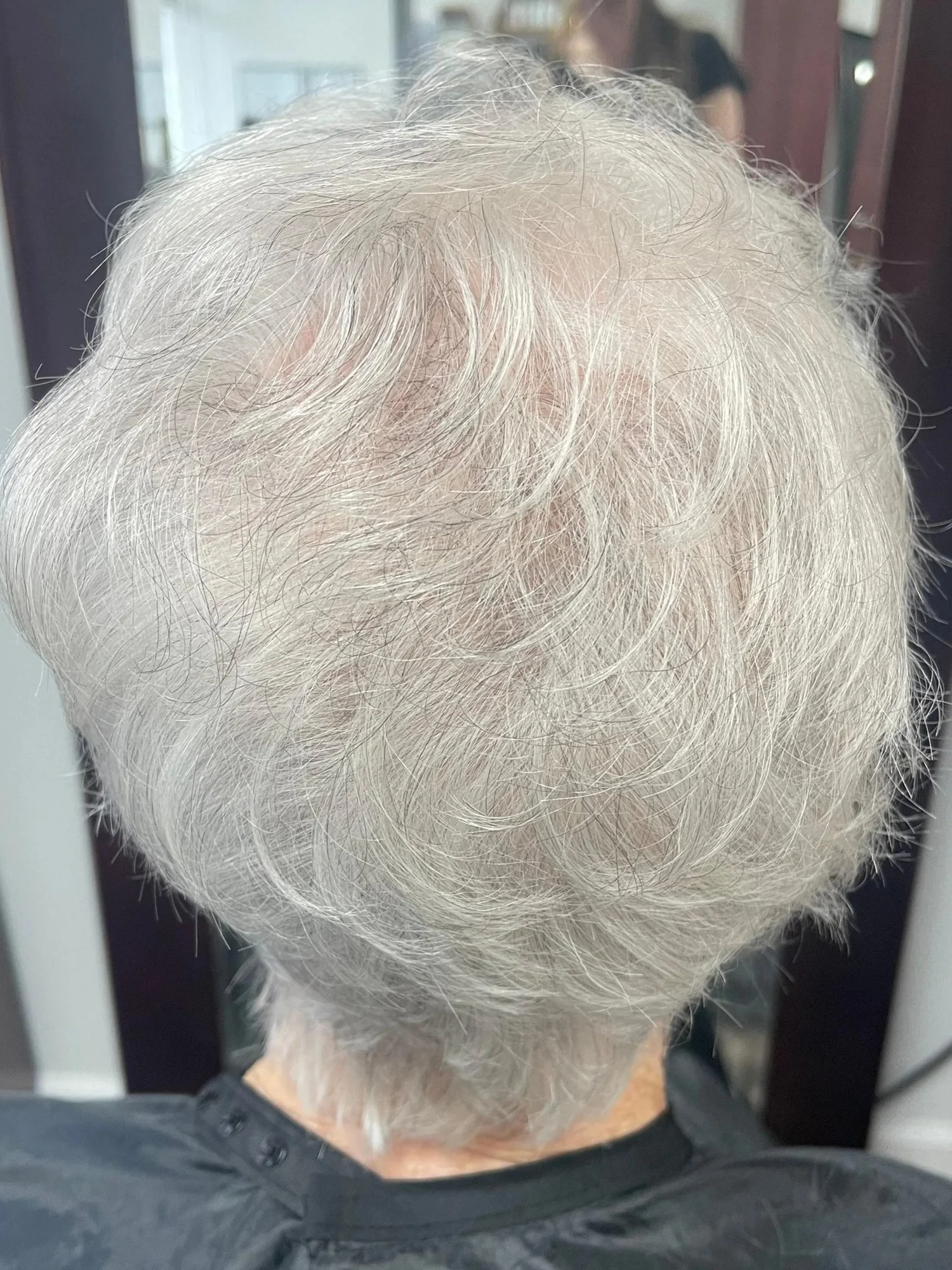
This case carries particular human weight. A woman in her late 70s, facing a profound loss, began experiencing significant shedding in the months that followed. What arrived at the practice was a client whose scalp told the story her words might not have: a large, exposed crown area with visible scalp, redness, and the sparse, wispy hair of a follicle population that had moved into the resting phase together.
Telogen Effluvium following emotional trauma is among the most compounding forms of hair loss — grief producing a physical change that adds to the psychological weight of it. Clinically, the encouraging part is that follicles in Telogen Effluvium are dormant, not destroyed. Telogen Effluvium also commonly resolves on its own over six to twelve months once the trigger has passed, which is worth keeping in mind when reading any individual case.
Before — baseline crown assessment (2 views)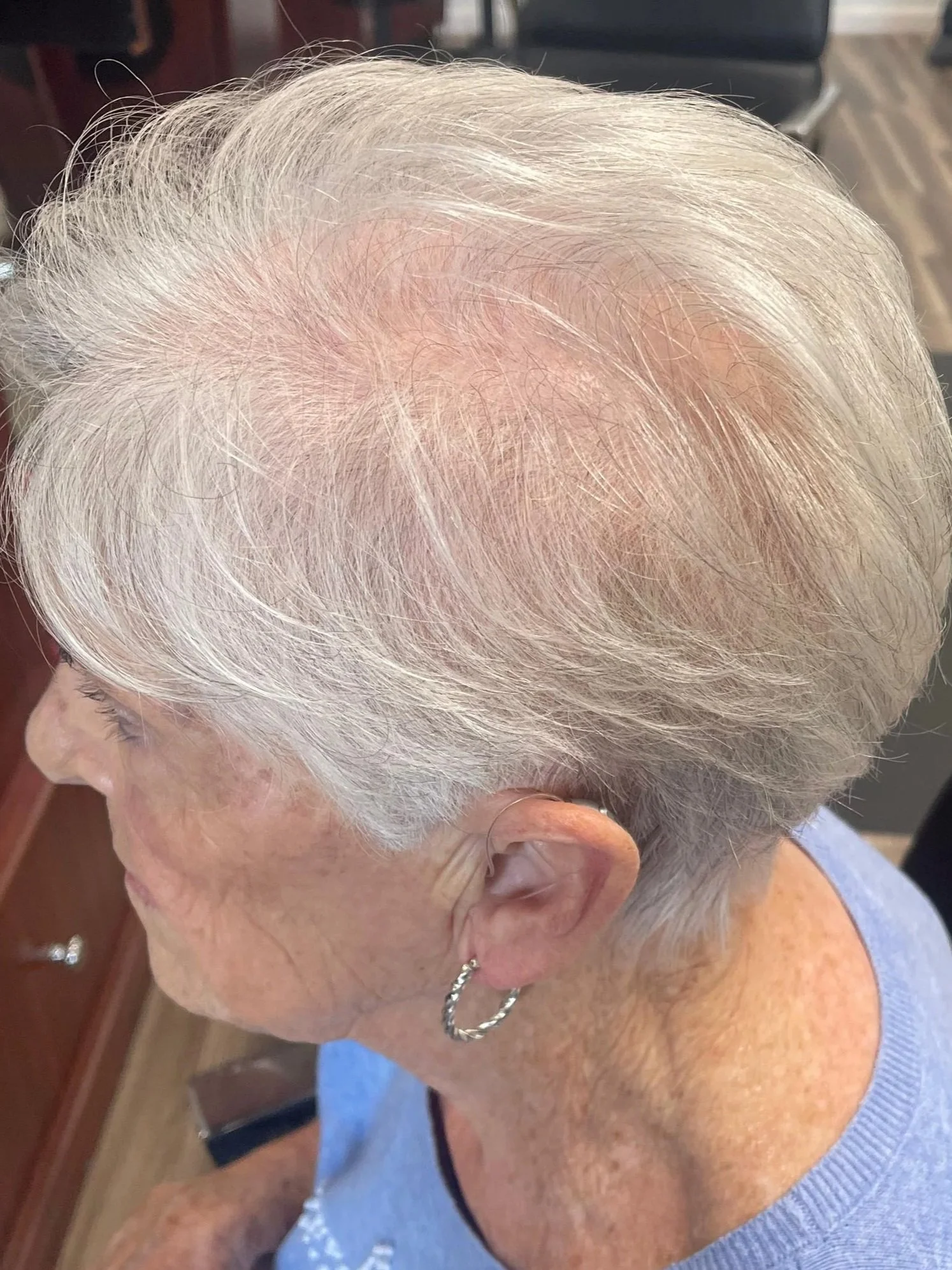
The 6-week protocol
Telogen Effluvium calls for a different primary approach than androgenetic alopecia. The follicles are not miniaturizing from DHT — they have moved into a prolonged resting phase following a stress response. The priorities are to support the return to a normal cycle, restore the scalp environment, and address the stress driver alongside it. Structured scalp massage was used as a primary tool here rather than a finishing touch — it supports microcirculation and the relaxation response that works against the stress side of the picture.
- Therapeutic Scalp Massage: Structured massage technique supporting microcirculation and the relaxation response, used as a core part of the session rather than a finishing step
- Dermotricology Treatment Mask: 50% Organic Turba and 50% Collagen — thermal activation mask drawing out follicular congestion and supporting normal cellular turnover at the scalp surface
- Microcirculation Support: Ampoule N — supports local blood flow and the delivery of oxygen and nutrients to follicles in a resting state
- Scalp Microbiome: Fungi Activ — botanical tonic supporting microbiome balance in an irritated scalp environment
- Home Care: Ampoule DT (Alchemy of DT) applied at home between clinical sessions
- Home Care: Alogenic Tonic — daily application to thinning zones
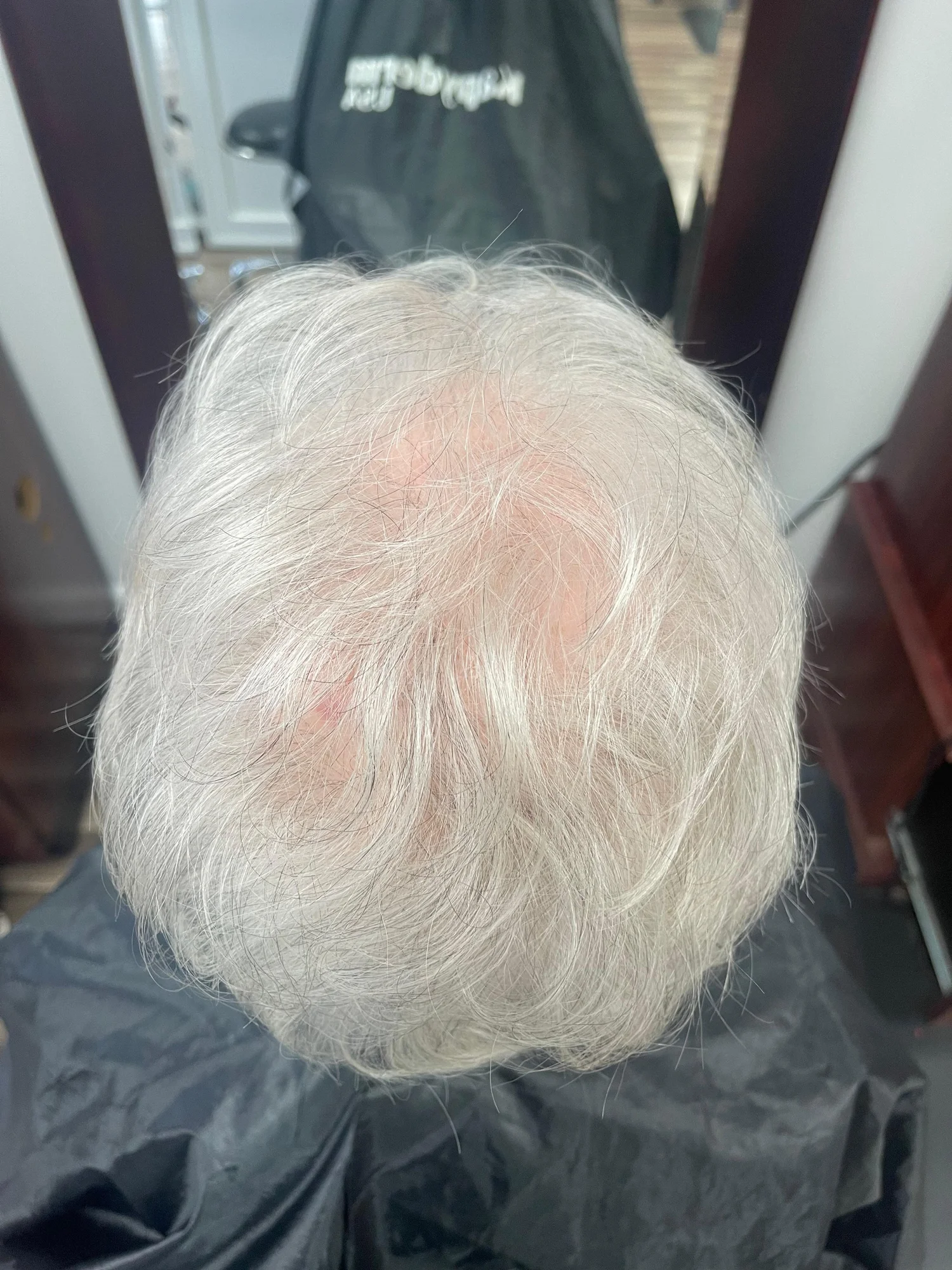
Within six weeks the client showed noticeable new growth and improved density. The crown, previously a large exposed area, shows visible coverage returning. Dormant but undamaged follicles can re-enter the growth phase relatively quickly once the trigger has passed and the scalp environment is supported — and age is not the limiting factor in that, because dormant follicles are not scarred follicles.
Why Plant-Based Protocols Are Used This Way
Both cases rest on the same principle — that the scalp is a living skin ecosystem, and that hair growth depends on the health of that ecosystem rather than on any single intervention. Reviews of botanical hair-loss remedies describe several mechanisms by which plant actives are thought to work: supplying nutrients, supporting scalp microcirculation, acting as antioxidants, and inhibiting 5-alpha reductase. The evidence base is genuinely mixed and the authors of those reviews call for more standardized trials — but the mechanisms below are the ones the Dermotricology approach is built around:
The difference between Case 1 (16 weeks, androgenetic alopecia) and Case 2 (6 weeks, Telogen Effluvium) reflects something worth understanding: the timeline is set by the condition, not by the product. Telogen Effluvium moves faster because follicles are dormant rather than miniaturized. Androgenetic alopecia is a longer commitment because the miniaturization itself is what has to change — and it is a progressive condition that does not stop being progressive.
Frequently Asked Questions
- Allam, A. T., El-Shiekh, R. A., El-Dessouki, A. M., et al. (2025). Pathophysiology, conventional treatments, and evidence-based herbal remedies of hair loss with a systematic review of controlled clinical trials. doi:10.1007/s00210-025-04286-6
- Sadgrove, N., Batra, S., Barreto, D., & Rapaport, J. (2023). An updated etiology of hair loss and the new cosmeceutical paradigm in therapy: Clearing 'the big eight strikes'. Cosmetics, 10(4), 106. doi:10.3390/cosmetics10040106
Real clients. Real results.
Find a certified center near you.
Both of these outcomes came from a certified Kapyderm USA Treatment Center — a trained Dermotricology Educator using plant-based protocols. Find the center nearest you and start with an evaluation.