Finasteride Alternative: The Scalp Ecosystem Science That DHT Blockers Completely Ignore
Finasteride Alternative:
The Scalp Ecosystem Science That DHT Blockers Completely Ignore
Every year, millions search for a finasteride alternative. The reason isn't that finasteride doesn't work — it's what it costs to stay on it. And it's what it leaves completely untreated. This is the 2026 clinical picture, including the regulatory ruling that just changed the conversation.
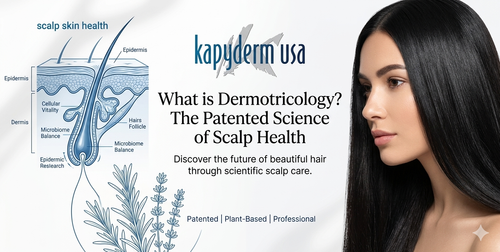
Finasteride reduces DHT. What it does not do is address the scalp environment — pH, microbial balance, sebum oxidation, perifollicular inflammation and microcirculation. Dermotricology (also called dermotrichology) is cosmetic scalp care built around that environment. This guide covers what the published research on botanical 5-alpha reductase inhibition actually shows, where it stops, and how the ecosystem approach fits alongside it.
This article is educational and is not medical advice. Hair loss has many causes — hormonal, nutritional, autoimmune, medication-related and scarring — and several of them need a physician's diagnosis before any treatment is chosen. Dermotricology is a cosmetic scalp care system; it does not diagnose, treat, cure or prevent any disease. Nothing here is a recommendation to start or stop a prescribed medication. Individual results vary.
- Why Millions Are Looking for a Finasteride Alternative
- The 2025 EU Ruling — What Actually Changed
- The Flaw in the "Block DHT, Grow Hair" Equation
- Scalp Microbiome Science: What the Research Shows
- What Is Dermotricology? The European Scalp Science
- Botanical 5-Alpha Reductase Inhibition: The Science
- The Market Landscape: Where Kapyderm Stands
- Who This Approach Is For
- Frequently Asked Questions
What Nobody Tells You About Finasteride — And Why Millions Are Looking for an Alternative
Every year, more people search "finasteride alternative" than almost any other hair loss term. The reason isn't that finasteride doesn't work — clinically, it does. The pivotal trials showed it reduces scalp and serum DHT and halts further loss in the large majority of treated men.[1] The reason is what it costs to stay on it.
Sexual dysfunction. Mood changes. A dependency where stopping treatment reverses the gains — often rapidly. And a body of patient reports describing persistent side effects even after discontinuation, discussed in peer-reviewed literature under the term "Post-Finasteride Syndrome" (PFS).[2]
For the many men and women who want to address pattern hair loss without pharmaceutical dependency, the question isn't whether to treat — it's what else can be done. Part of the answer, according to a growing body of dermatological research, involves something DHT-focused treatments do not touch: the condition of the scalp itself.
The 2025 EU Ruling — What Actually Changed 2025 Update
In 2025, the European Medicines Agency's Pharmacovigilance Risk Assessment Committee (PRAC) confirmed suicidal ideation as a side effect of finasteride tablets — both the 1 mg dose prescribed for androgenetic alopecia and the 5 mg dose used for prostate enlargement. The review identified 313 relevant finasteride cases in EudraVigilance, the EU's pharmacovigilance database, judged probably or possibly related to treatment, most of them in patients being treated for hair loss.[3]
That number needs its denominator, and most articles on this subject leave it out: PRAC set those cases against an estimated exposure of roughly 270 million patient-years of finasteride use. The committee's own conclusion was that the benefits of these medicines continue to outweigh their risks for all approved uses. This is a rare adverse effect that regulators decided patients must be told about — not a finding that the drug is broadly unsafe.[3]
European Union. On 19 June 2025 the CMDh endorsed the PRAC recommendations, and on 22 August 2025 the European Commission issued implementing decision C(2025) 5896 final, binding across EU Member States. All packages of 1 mg finasteride tablets now carry a mandatory patient card telling patients that the medicine can cause depressed mood, depression or suicidal thoughts, and to stop and contact their doctor if mood changes occur.[3]
United States. The FDA has listed depression on the finasteride label since 2011 and added suicidal ideation in 2022. Separately, on 22 April 2025 the agency issued an alert about compounded topical finasteride — the formulation sold by many telehealth hair loss platforms — after 32 adverse event reports between 2019 and 2024 describing erectile dysfunction, anxiety, suicidal ideation, brain fog, depression, fatigue, insomnia, decreased libido and testicular pain. Most of those reports stated the symptoms persisted after the product was stopped. There is no FDA-approved topical finasteride; compounded versions have not been evaluated by the FDA for safety, effectiveness or quality.[4]
These developments are not a reason to panic, and they are not a reason to stop a prescribed medication without talking to the physician who prescribed it. They are a reason to have a fully informed conversation before starting one.
The Flaw in the "Block DHT, Grow Hair" Equation
Androgenetic alopecia — pattern hair loss affecting an estimated 50 million men and 30 million women in the United States — is almost universally framed as a hormone problem. The 5-alpha reductase enzyme converts testosterone into dihydrotestosterone (DHT). DHT binds to genetically sensitive follicles. The follicle miniaturizes. Hair thins and eventually stops growing.
Block DHT. Grow hair back.
The logic is compelling, which is why finasteride, dutasteride, and the telehealth platforms that prescribe them — Hims, Keeps, Happy Head, Musely — have built large businesses on it. But the single-pathway model leaves something out that dermatological research has been documenting for years: DHT suppression does not restore the scalp environment in which follicular damage accumulates.
A cross-sectional study of 72 patients and 24 healthy controls found altered bacterial and fungal communities inside the hair follicles of people with androgenetic alopecia, and its authors argue the findings reframe AGA as partly an ecological imbalance rather than purely a hormonal one.[5]
The proposed cascade looks like this:
Disrupted Scalp pH → Sebum Accumulation & Oxidation → Perifollicular Micro-Inflammation → Follicle Miniaturization
When mass-market shampoos strip the scalp using harsh synthetic surfactants like Sodium Lauryl Sulfate (SLS), they disturb the scalp's acid mantle — the slightly acidic pH barrier (4.5–5.5) associated with microbial balance and sebum regulation. The scalp responds with compensatory lipid production. Excess sebum accumulates at the follicular opening, is metabolized by resident microflora, and is associated with a localized inflammatory response around the hair bulb.
It should be said plainly that this sequence is a proposed mechanism supported by association studies, not a settled causal chain. What is clear is that the inflammatory and microbial environment of the scalp is measurably different in pattern hair loss, and that DHT-only protocols do nothing about it. This is the clinical premise behind Dermotricology (also referred to as dermotrichology).
Scalp Microbiome Science: What the Research Actually Shows
A 2026 review in the International Journal of Dermatology synthesized the current evidence on the microbiome-lipid-microinflammation axis in androgenetic alopecia.[6] Its own summary is worth quoting the shape of, because it is more careful than most of what gets written about this topic: the evidence is described as preliminary, the most robust finding is enrichment of Cutibacterium acnes — particularly in men — and changes in Malassezia, Lawsonella and Corynebacterium have also been described, though results are less consistent across studies.
That second panel matters, and it is where a lot of marketing copy on this subject goes wrong. The direction of the Malassezia finding is genuinely disputed: the review above describes increases, while the follicle-level study of 72 patients reports loss of commensal Malassezia alongside a gain in opportunistic microbes.[5][6] Anyone telling you the science is settled on which way that goes has not read both papers.
What is not disputed is that the scalp in androgenetic alopecia is microbially different from a healthy scalp, and that the difference is measurable. A 2025 study in mSystems used multi-kingdom sequencing and machine learning to develop a microbial index of scalp health (MiSCH), demonstrating that scalp dysbiosis in AGA can be quantified rather than merely described.[7]
No pharmaceutical DHT blocker addresses any of this, and it does not claim to. Finasteride reduces DHT. It does not restore scalp pH, rebalance the microbial community, clear oxidized sebum from the follicular opening, or reduce perifollicular inflammation. Those are the gaps a Dermotricology protocol is built around. Whether closing them produces measurably more hair than a pharmaceutical alone has not been tested in a controlled trial — that comparison does not exist, and we are not going to pretend otherwise.
What Is Dermotricology? The European Scalp Ecosystem Science
Dermotricology (sometimes spelled dermotrichology) is a specialized discipline developed by Laboratorios Kapyderm in Málaga, Spain, with 35+ years of EU-regulated clinical research behind its protocols.
Certified professionals in the Kapyderm USA network hold the title Technician of Dermotricology — sometimes referred to as a Dermotricologist or dermotrichologist. Where a dermatologist might prescribe finasteride to suppress DHT system-wide, a certified Technician of Dermotricology uses high-resolution trichoscopy (the Kapykon Professional Scalp & Skin Analyzer) to evaluate the follicular environment at a microscopic level — looking at visible inflammation, sebum accumulation, scalp condition and the degree of follicle miniaturization before any protocol begins. This is a cosmetic evaluation of the scalp's condition, not a medical diagnosis.
Treatment then follows a three-phase environmental restoration sequence:
Kapyderm Hair Loss Wash
Formulated to match the scalp's physiological pH without the harsh surfactants associated with rebound sebum overproduction. Hydrolyzed collagen, keratin, and botanical extracts including arnica and cinchona bark help regulate the feel of an oily scalp while maintaining the condition of the hair shaft. The cleansing base step that every subsequent step builds on.
Kapyderm Organic Turba (Peat) Mask
Before further actives are applied, congestion at the follicular opening is addressed. The Organic Turba mask uses organic bog peat and humic acids to help break down oxidized sebum and lift accumulated residue out of the follicular opening. This is the step that has no equivalent in a DHT-focused routine.
Ampoule DT or Alogenic Tonic
With the follicular channel clear, concentrated botanical actives — delivered via Ampoule DT or Alogenic Tonic — are applied to thinning zones. Some certified treatment centers also use the Kapydermia microneedling device to support delivery of these actives, where permitted by state scope of practice; microneedling is regulated differently from state to state and by license type, and not every center offers it.
Because this approach works on the condition of the scalp rather than on a hormonal pathway, it is used as an ongoing hygiene routine rather than as a drug regimen. That is a difference in how the two approaches work — not a claim that results persist indefinitely after stopping, which has not been tested.
Botanical 5-Alpha Reductase Inhibition: What the Research Supports
Addressing follicle miniaturization without systemic pharmaceutical intervention means looking at botanicals with documented activity against the 5-alpha reductase enzyme. The Kapyderm 5αR supplement uses two of them. Both have real published mechanisms — and both have real limits worth stating up front.
Epilobium Parviflorum (Small-Flowered Willowherb)
Epilobium parviflorum is not well known in the American hair loss market. Its 5-alpha reductase activity is genuinely documented: the active principle was isolated and identified in 1996 as Oenothein B, a macrocyclic ellagitannin, in a biochemical assay against 5-alpha reductase.[8] A follow-up study confirmed that oenothein A and oenothein B are the main constituents responsible for inhibiting both 5-alpha reductase and aromatase across Epilobium species.[9] A 2025 review in Nutrients summarizes the broader antioxidant, anti-inflammatory and vascular research on the plant.[10]
The honest limit: that enzyme work was done in the context of prostate research, in laboratory assays — not in scalp trials. There is no published randomized trial of Epilobium parviflorum for hair loss. The mechanism is real; the clinical evidence in hair specifically is not yet there, and any article telling you otherwise is selling something.
Serenoa Repens (Saw Palmetto) — The Better-Studied of the Two
Saw palmetto's lipidosterolic extract inhibits 5-alpha reductase, and laboratory testing of standardized extracts has measured comparable activity against both isoenzymes — 5αR-1 and 5αR-2.[11] That is a meaningful biological distinction from finasteride, which acts preferentially on Type II. Type I predominates in skin, Type II in the prostate.
A systematic review in Skin Appendage Disorders (Evron et al., 2020) pooled five randomized clinical trials and two prospective cohort studies of supplements containing saw palmetto at 100–320 mg, in androgenetic alopecia and telogen effluvium.[12] Reported across those studies:
- 60% improvement in overall hair quality
- 83.3% of patients with increased hair density
- 27% improvement in total hair count
- 52% with stabilized disease progression
- Well tolerated, with no serious adverse events reported in alopecia patients
The review's own conclusion, in the authors' framing: supplements containing saw palmetto may be a treatment option for AGA, telogen effluvium and self-perceived thinning — but robust high-quality data are lacking, and larger RCTs isolating saw palmetto's own contribution are needed.[12] Those numbers are encouraging and they come from small studies. Both things are true, and a company quoting the first half without the second is not being straight with you.
In the Kapyderm 5αR supplement, Saw Palmetto is included at 200 mg per daily dose alongside Epilobium (400 mg), Boldo (200 mg), Artichoke (100 mg), and Biotin (50 µg — 100% NRV). Biotin contributes to the maintenance of normal hair — an EU-approved health claim.
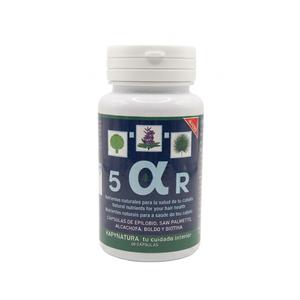
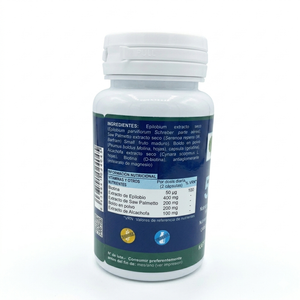
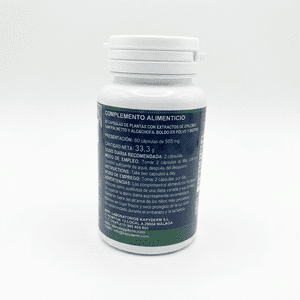
These statements have not been evaluated by the Food and Drug Administration. This product is not intended to diagnose, treat, cure, or prevent any disease. Consult your physician before use, particularly if pregnant, nursing, or taking any medication.
A Note on Pumpkin Seed Oil — The Other Natural DHT Blocker
Competitor articles frequently list pumpkin seed oil alongside saw palmetto, and it deserves a fair hearing rather than a dismissal. Pumpkin seed oil contains beta-sitosterol, a plant sterol that inhibits 5-alpha reductase through a mechanism similar to saw palmetto's. The most-cited trial (Cho et al., 2014) randomized 76 men with mild-to-moderate androgenetic alopecia to 400 mg of pumpkin seed oil daily or placebo for 24 weeks, and reported a mean hair count increase of 40% versus 10% in the placebo group (P < 0.001), with no difference in adverse effects.[13]
In fairness, that is a stronger piece of clinical evidence than exists for Epilobium parviflorum in hair loss, where the published work is enzymatic rather than clinical. The Kapyderm formula uses Epilobium and saw palmetto because of their documented enzyme activity and their place in the European formulation tradition the line comes from — not because pumpkin seed oil has been shown to be inferior. It hasn't been. Anyone comparing these ingredients should know that the whole botanical category rests on small studies.
The Market Landscape: Where Kapyderm Stands
The current hair loss treatment market divides into three camps — each with a different mechanism, risk profile, and regulatory category:
| Approach | Category | Core Mechanism | Systemic Risk | 2025 Regulatory Status |
|---|---|---|---|---|
| Prescription Telehealth Hims · Keeps · Happy Head |
Prescription drug (finasteride) + OTC drug (minoxidil) | Synthetic 5AR inhibition + minoxidil | Yes — hormonal, sexual and mood effects documented on the label | EU Aug 2025: patient card required on 1 mg finasteride. FDA Apr 2025: alert on compounded topical finasteride. |
| Supplement-Only Nutrafol · Viviscal |
Dietary supplement | Oral botanicals, adaptogens, micro-nutrition | Minimal — mild GI sensitivity most commonly reported | No new regulatory concerns. Evidence largely company-sponsored. |
| Kapyderm Dermotricology Certified Technicians · EU-regulated |
Cosmetic scalp care (+ optional dietary supplement) | Topical botanicals, scalp pH and sebum management, trichoscopy evaluation | None systemic — topical cosmetic use | EU Cosmetics Reg 1223/2009. No controlled trial evidence in androgenetic alopecia. |
The last cell in that table is deliberate. Kapyderm's category advantage is that it carries no pharmaceutical side effect profile — and its honest disadvantage is that cosmetic products are not required to run the controlled trials that drugs are, and this one hasn't. The distinction from supplement-only competitors is structural rather than evidentiary: a certified Technician of Dermotricology evaluates the scalp with the Kapykon camera and adjusts the routine to what is actually there, where a supplement brand ships the same capsule to everyone.
Who This Approach Is For
The Dermotricology protocol and the Kapyderm botanical approach are most often chosen by:
Men and Women Seeking a Finasteride Alternative
Those not willing to accept the side effect profile or ongoing dependency of prescription 5AR inhibitors — particularly in the early-to-mid stages of androgenetic alopecia, before miniaturization has gone as far as it goes. The 2025 EU patient card requirement and the FDA's alert on compounded topical finasteride make the informed consent conversation more detailed than it was two years ago.
Post-Finasteride Patients
Those who have discontinued a prescription treatment and want a non-pharmaceutical scalp routine while their scalp settles. Anyone in this position should be working with a physician; scalp care is supportive, not a treatment for persistent post-drug symptoms.
Women With Hormonal Hair Thinning
Particularly those in perimenopause or post-menopause, for whom finasteride is contraindicated in pregnancy and childbearing potential and now carries additional psychiatric risk disclosure. Pharmaceutical options for women are genuinely limited. The Dermotricology protocol works on the scalp environment rather than on hormonal pathways — but hair thinning in women has many possible causes, including thyroid disease, iron deficiency and autoimmune conditions, and a physician's workup should come first.
GLP-1 Medication Users Experiencing Hair Shedding
A rapidly growing group: people using semaglutide or tirzepatide (Ozempic, Wegovy, Mounjaro, Zepbound) who notice shedding. A 2026 cross-sectional survey of 152 GLP-1 users found 70.4% reported hair shedding, against the 3–7% recorded in the clinical trials, with the effect concentrated in women and in those losing the most weight fastest.[14] The usual mechanism is telogen effluvium from rapid weight loss, which frequently resolves once weight stabilizes. Supportive scalp care is reasonable here; so is telling the prescribing physician, since nutritional intake is part of the picture.
Individuals With Oily or Flaking Scalp Alongside Thinning
Those where visible scalp irritation, flaking and sebum overproduction accompany pattern hair loss — a combination extremely common in practice and almost entirely unaddressed by DHT-only routines. Persistent flaking, itching or redness should be looked at by a dermatologist, since seborrheic dermatitis, psoriasis and scarring alopecias can all present this way and are medical conditions.
Frequently Asked Questions
- Kaufman KD, Olsen EA, Whiting D, et al. (1998). Finasteride in the treatment of men with androgenetic alopecia. Journal of the American Academy of Dermatology, 39(4), 578–589.
- Traish AM. (2020). Post-finasteride syndrome: A surmountable challenge for clinicians. Fertility and Sterility, 113(1), 21–50. doi:10.1016/j.fertnstert.2019.11.030
- European Medicines Agency. (22 August 2025). Measures to minimise risk of suicidal thoughts with finasteride and dutasteride medicines. EMA/202053/2025. CMDh endorsement 19 June 2025; European Commission implementing decision C(2025) 5896 final, 22 August 2025. ema.europa.eu
- U.S. Food and Drug Administration. (22 April 2025). FDA alerts health care providers, compounders and consumers of potential risks associated with compounded topical finasteride products. Center for Drug Evaluation and Research. fda.gov
- Alterations in the hair follicle bacteriome and mycobiome in androgenetic alopecia: A cross-sectional study of 72 patients and 24 healthy controls. Clinical, Cosmetic and Investigational Dermatology, 2026;19:590873. doi:10.2147/CCID.S590873
- Economopoulos V. (2026). Scalp microbiome alterations in androgenetic alopecia: Patterns and emerging mechanistic insights. International Journal of Dermatology, 1–10. doi:10.1111/ijd.70365
- Microbial dysbiosis and its diagnostic potential in androgenetic alopecia: Insights from multi-kingdom sequencing and machine learning. mSystems, 2025. doi:10.1128/msystems.00548-25
- Lesuisse D, Berjonneau J, Ciot C, et al. (1996). Determination of Oenothein B as the active 5-α-reductase-inhibiting principle of the folk medicine Epilobium parviflorum. Journal of Natural Products, 59(5), 490–492. doi:10.1021/np960231c (PMID 8778238)
- Ducrey B, Marston A, Göhring S, Hartmann RW, Hostettmann K. (1997). Inhibition of 5α-reductase and aromatase by the ellagitannins oenothein A and oenothein B from Epilobium species. Planta Medica, 63(2), 111–114. (PMID 9140222)
- Lewandowska K, et al. (2025). Epilobium parviflorum — antioxidant and anti-inflammatory properties and benefits to vascular health. Nutrients, 17(9), 1577. doi:10.3390/nu17091577 (PMID 40362886)
- Cartwright EJ, Dohnalek MH, Hill WS. (2023). Lipid profile and 5α-reductase inhibition activity of proprietary ultrahigh-pressure supercritical carbon dioxide and hexane saw palmetto extracts. Uro, 3(1), 27–39. doi:10.3390/uro3010005
- Evron E, Juhasz M, Babadjouni A, Mesinkovska NA. (2020). Natural hair supplement: Friend or foe? Saw palmetto, a systematic review in alopecia. Skin Appendage Disorders, 6(6), 329–337. doi:10.1159/000509905 (PMID 33313047)
- Cho YH, Lee SY, Jeong DW, et al. (2014). Effect of pumpkin seed oil on hair growth in men with androgenetic alopecia: A randomized, double-blind, placebo-controlled trial. Evidence-Based Complementary and Alternative Medicine, 2014:549721. doi:10.1155/2014/549721
- Alharbi S, Alkhalifah A. (2026). GLP-1 receptor agonists and hair loss: A cross-sectional survey (n=152). Skin Appendage Disorders, 12(4), 283–295. doi:10.1159/000550540
14 sources. Refs 3 and 4 are regulatory documents rather than research papers. The 5-alpha reductase work on Epilobium parviflorum (refs 8–10) is enzymatic and was conducted in prostate research, not in hair loss trials. No controlled trial of the Dermotricology protocol in androgenetic alopecia exists.
Ready to address the scalp biology finasteride doesn't touch?
Find a certified Technician of Dermotricology near you, explore the at-home protocol, or bring the Kapyderm system to your practice.