The Science of Black Hair Loss & Scalp Discomfort: Why Trichologists Choose Dermotricology for Real Results
CCCA, Traction Alopecia & AKN in Black Women:
Early Signs, Clinical Causes & Plant-Based Recovery

Hair loss in Black women is not a single condition — it is a constellation of distinct clinical disorders, each with a different mechanism, a different timeline, and a different intervention window. CCCA starts at the crown and scars from the inside out. Traction Alopecia begins at the hairline and progresses silently with every protective style. AKN develops on the scalp and nape as inflammatory bumps that can destroy follicles permanently if left untreated.
What all three share is this: the window for intervention is narrow, and most people miss it. By the time hair loss is visibly obvious, follicular scarring may have already begun. This guide gives you the clinical understanding to recognize these conditions early — and the treatment framework to address them before permanent damage occurs.
1. Why Black Women Are Disproportionately Affected
The conditions discussed in this article are not inevitable — but they are significantly more prevalent in Black women due to a convergence of biological, genetic, and cultural factors that interact in ways the standard dermatology literature is only beginning to fully document.
Hair structure and scalp biology
Afro-textured hair has a uniquely elliptical cross-section and a tightly coiled curl pattern that creates natural points of structural vulnerability along the hair shaft. This curl pattern also means sebum — the scalp's natural protective oil — travels more slowly down the hair shaft, leaving the scalp more susceptible to dryness, inflammation, and congestion. These biological realities do not cause hair loss on their own, but they create conditions where certain styling practices, chemical treatments, and genetic predispositions have outsized impact.
Styling practices and protective styles
Braids, weaves, extensions, relaxers, and heat styling — when applied repeatedly or incorrectly — create mechanical tension and chemical stress on the follicle. What makes this particularly dangerous is that the damage is cumulative and initially invisible. You do not feel a follicle scarring. You feel the result months or years later when the hair stops growing back.
Genetic predisposition
CCCA has a documented genetic component — research published in the New England Journal of Medicine identified a missense mutation in approximately one-third of CCCA patients. If your mother, grandmother, or aunts experienced thinning at the crown, your risk is meaningfully elevated and early monitoring is clinically warranted.
These conditions are not caused by Black hair or by protective styling in isolation. They are caused by the intersection of biological vulnerability, chemical and mechanical stress, and delayed clinical intervention. The solution is not to stop styling — it is to maintain clinical scalp health alongside styling.
CCCA is a progressive, inflammatory scarring alopecia that begins at the vertex (crown) of the scalp and spreads outward in a centrifugal pattern. It is the most common form of scarring hair loss in Black women and one of the most underdiagnosed conditions in the U.S. hair care space.
The word "cicatricial" means scarring — and that is the central clinical reality of CCCA. As the inflammatory process progresses, the hair follicle is gradually replaced by fibrous scar tissue. Once a follicle is fully scarred, it cannot produce hair again. This is why early diagnosis and intervention are not optional — they are the difference between recovery and permanent loss.
CCCA causes permanent, irreversible follicular scarring if left untreated. Every month of delayed intervention allows the inflammatory process to spread further outward from the crown. If you are experiencing crown thinning, scalp tenderness, or itching — do not wait. Seek a clinical assessment immediately.
Early warning signs of CCCA
What causes CCCA at the cellular level
CCCA is driven by a lymphocyte-predominant inflammatory process — the immune system attacks the follicle directly, triggering a cascade of inflammation that destroys the follicle's infrastructure. The exact trigger is not fully understood, but contributing factors include: chronic mechanical tension on the scalp from tight hairstyles, chemical damage from relaxers and color treatments, seborrheic dermatitis (which is disproportionately common in CCCA patients due to low-frequency washing), and genetic predisposition.
The inflammatory destruction begins at the follicle's isthmus — the middle segment of the follicle — and progresses both upward and downward until the entire follicular unit is replaced by fibrous tissue.
Traction Alopecia (TA) is caused by chronic, repetitive mechanical tension on the hair follicle — most commonly from tight braids, weaves, extensions, ponytails, or buns worn consistently over months and years. Unlike CCCA, Traction Alopecia begins at the hairline, temples, and edges rather than the crown.
The good news about TA is that in its early stages it is fully reversible — the follicle is not yet scarred, only stressed. The bad news is that most people do not seek treatment until the thinning is visually significant, by which point the follicle may have progressed to a semi-permanent or permanent state.
Early warning signs of Traction Alopecia
The extensions risk — why cosmetic fixes worsen the condition
One of the most common responses to thinning edges is to apply more extensions or a weave to conceal the loss. This is one of the most clinically damaging decisions a patient can make. Additional mechanical tension applied to follicles already under stress from traction accelerates the scarring process — converting what was a reversible condition into a permanent one.
Applying extensions to cover thinning edges worsens Traction Alopecia and can trigger permanent follicular scarring. If your edges are thinning, removing tension is the first clinical step — not adding more. Wait until a clinical protocol has stabilized the follicle before any new tension-based style is applied.
Acne Keloidalis Nuchae (AKN) is a chronic inflammatory condition that presents as firm, papular bumps on the nape of the neck and occipital scalp. Despite its name it is not actually acne — it is a folliculitis (inflammation of the follicle) that, if left untreated, progresses to keloid-like scarring plaques that permanently destroy the hair follicles in the affected area.
AKN disproportionately affects men of African descent but is also seen in women. It is frequently misdiagnosed as folliculitis, razor bumps, or scalp acne — leading to inappropriate treatments that can worsen the condition.
Early warning signs of AKN
Razor bumps (pseudofolliculitis barbae) are caused by ingrown hairs and resolve with proper shaving technique. AKN is a primary inflammatory folliculitis that progresses regardless of shaving habits and requires clinical anti-inflammatory intervention. If you have persistent, worsening bumps at the nape that standard acne treatments have not resolved — seek a clinical assessment rather than continuing to treat the symptom.
4. The Dermotricology Approach to These Three Conditions
Dermotricology is the clinical science of scalp and hair diagnosis — a specialty with over 30 years of European clinical research that addresses the cellular environment of the follicle rather than just the surface symptoms. It is the approach Kapyderm USA uses with every clinical protocol.
For CCCA, Traction Alopecia, and AKN, the Dermotricology framework identifies three common underlying factors that must be addressed simultaneously for clinical results:
- Scalp inflammation — the primary driver in all three conditions. Anti-inflammatory plant-based tonics reduce the inflammatory cascade at the follicle level without the systemic side effects of corticosteroids
- Follicle congestion and sebum dysregulation — congested follicle openings prevent active ingredients from reaching the hair bulb. Clinical cleansing protocols clear this congestion and restore permeability
- Nutritional support at the cellular level — hair follicles require specific micronutrients to function. Internal Kapynatura supplements address the systemic deficiencies that compound topical conditions
Every certified Kapyderm Treatment Center uses the Kapykon professional diagnostic camera to assess scalp and follicle health before treatment. Digital trichoscopy identifies the specific condition, its stage, and the precise protocol needed — rather than applying a generic approach to a complex clinical situation. This is the diagnostic step most salon treatments and home products skip entirely.
5. Dermotricology vs. Standard Medical Treatments
The standard medical approach to CCCA, Traction Alopecia, and AKN involves corticosteroids, oral antibiotics, and topical minoxidil. These treatments address inflammation and stimulate blood flow — but they come with limitations that are particularly relevant for long-term management:
| Factor | Standard treatments | Kapyderm Dermotricology |
|---|---|---|
| Addresses scalp inflammation | Yes — steroids | Yes — plant-based anti-inflammatory tonics |
| Side effects | Steroid atrophy, systemic absorption, rebound inflammation | None — 100% plant-based formulas |
| Scalp microbiome impact | Antibiotics disrupt scalp microbiome balance | Supports and restores scalp microbiome |
| Rebound on stopping | Yes — minoxidil and steroids often cause rebound | No — protocol corrects underlying condition |
| Internal nutritional support | Not typically addressed | Kapynatura supplements address root deficiencies |
| Diagnostic precision | Biopsy and clinical exam | Kapykon digital trichoscopy + clinical assessment |
| Available without prescription | No — requires dermatologist | Yes — home protocol and certified centers |
This is not a binary choice — Dermotricology can be used alongside medical treatment, and in cases of advanced CCCA with active scarring, medical intervention may be necessary as a first step. The Dermotricology protocol is particularly powerful as a maintenance and prevention protocol — stopping the progression, supporting regrowth in non-scarred areas, and preventing recurrence after medical treatment.
The following case studies were conducted by certified Kapyderm USA Treatment Centers. They represent real patients, real before/after documentation, and real Dermotricology protocols. These are not testimonials — they are clinical case records.
When the client first arrived on January 24, 2024, the occipital region (nape) was completely congested with hard, raised, inflamed papules and active, oozing lesions showing signs of bleeding and extreme localized tenderness — the result of 8 consecutive years of unyielding follicular inflammation without effective clinical intervention.
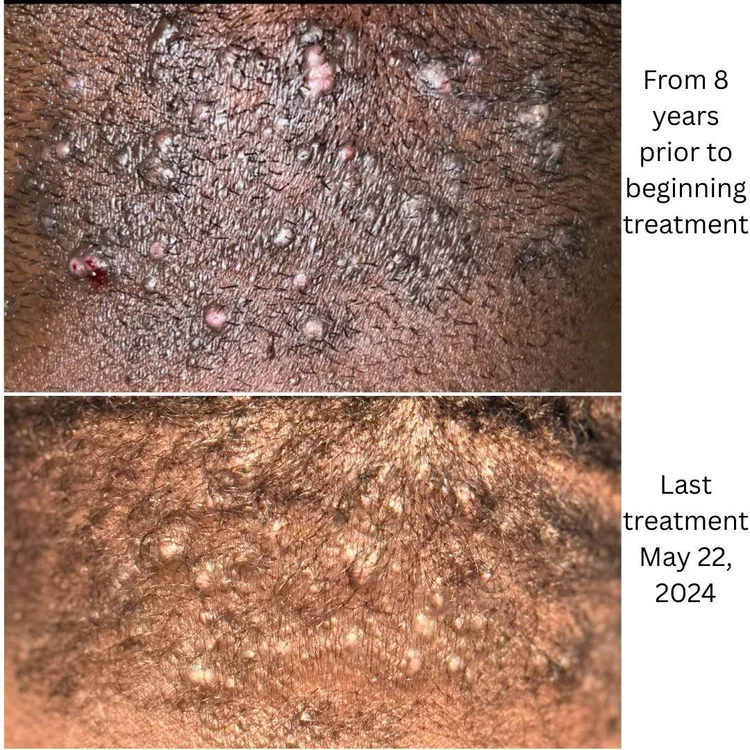
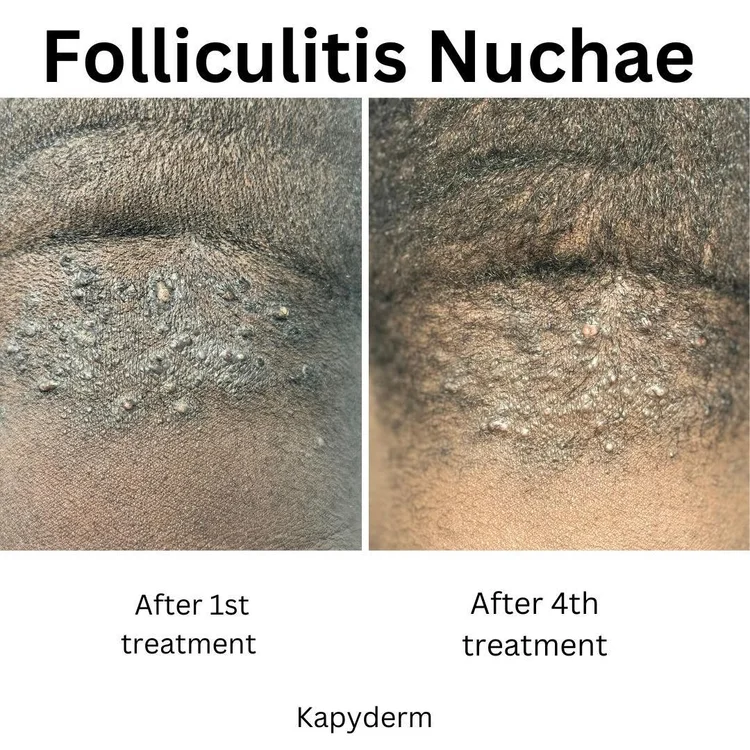
After the 1st treatment: The active immune cascade was immediately checked, showing an initial reduction in raw inflammation and swelling. After the 4th treatment (April 2024): The hard, fibrotic papules had flattened dramatically, bleeding ceased entirely, and the skin barrier achieved noticeable structural stabilization.
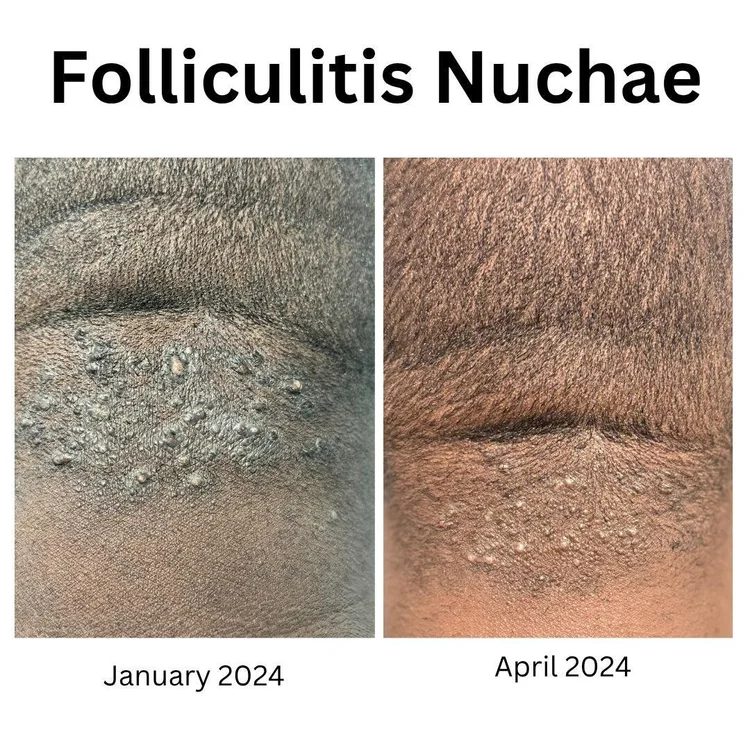
The texturing and deep-seated congestion were entirely resolved. The underlying skin ecosystem recovered completely, saving the surrounding hair follicles from permanent, destructive keloidal scarring — an outcome 8 years of standard treatments had failed to achieve.
- Dermal Shock & Purifying: KS-115 Tonic applied directly to lesions, followed by intensive thermal paste of Organic Turf (Turba) blended with Collagen and N Ampoule to draw out deep toxic congestion and calm the tissue
- Advanced Physical Modalities: High-Frequency physical therapies (glycerine) alongside Kapydermia Plus Laser to stimulate blood circulation and deeply oxygenate the tissue
- Dermal Remodeling: Advanced mesotherapy and dermopunction using Base Tonic, Alogenic Tonic, and Ampoules DT to deliver concentrated plant nutrition to follicle bulbs while breaking up early-stage fibrotic tissue
- Home Care Maintenance: Daily cleansing with Normalizing Cleansing Base, plus a customized topical blend of Seboregulator and Fungi Activ twice daily
The hairline had receded significantly along the frontal and temporal margins, leaving behind sparse, scattered vellus hairs struggling to mature. Continuous tension from heavy protective styles had suffocated the area, leaving the skin unnaturally smooth, shiny, and irritated — with hyperpigmented patches indicating severe dermal stress and follicular detachment from blood supply.
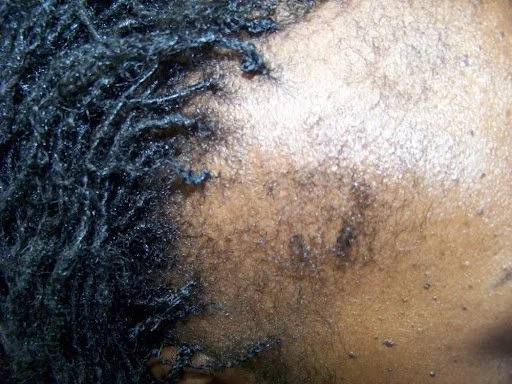
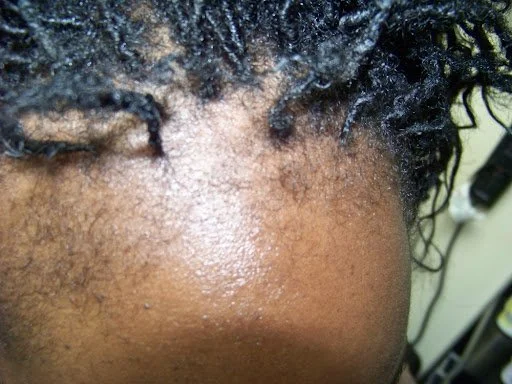
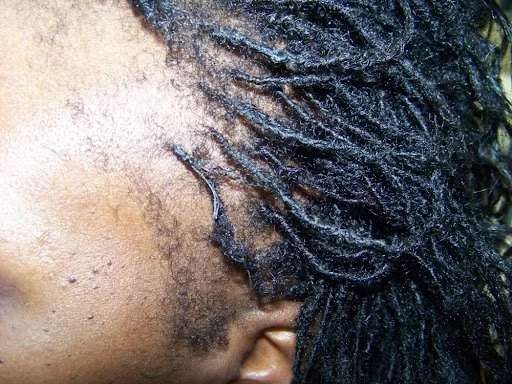
Following a strict 6-month treatment timeline, the suffocated, scar-like appearance was entirely resolved. The skin was deeply hydrated, structurally balanced, and re-oxygenated. Follicles that had been physically detached from nutrition were completely re-awakened — producing a dense explosion of terminal hair back into the temporal recession zone.
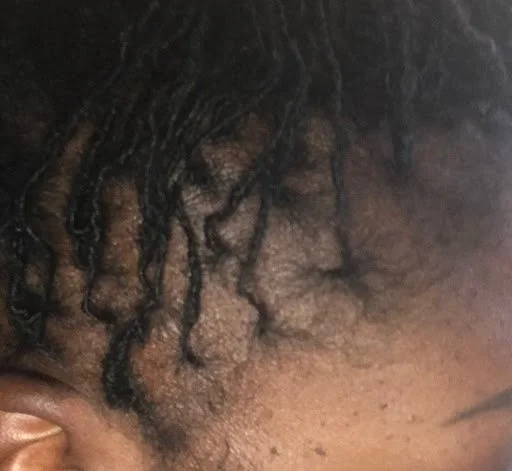
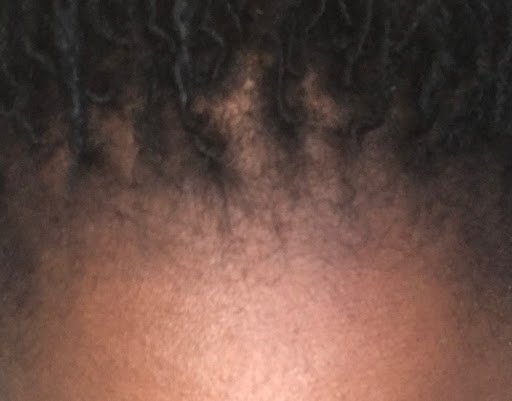
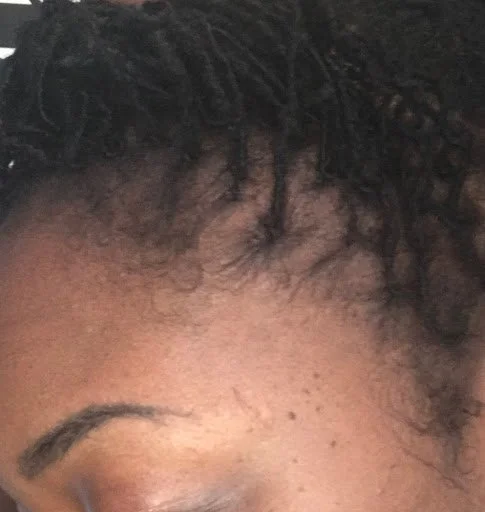
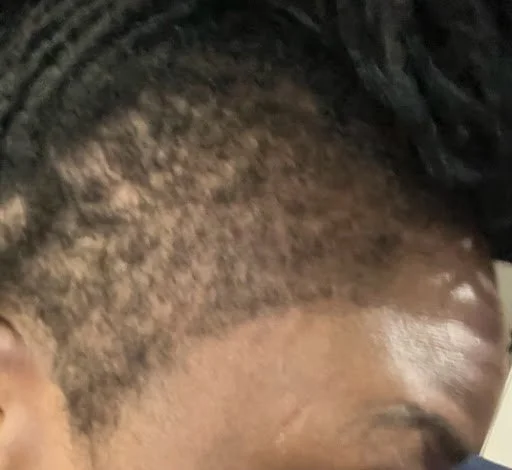
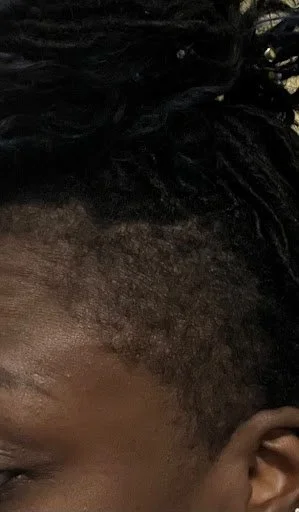
The client achieved such thick, robust, beautifully coiled density that she chose to cut her hair into a sharp low taper — specifically to put her fully restored edges on display. Reaching the point where a client willingly wears a short cut to show off their hairline is the ultimate proof of deep-level cellular restoration.
- In-Center Skin Regulation: K2 Tonic to regulate overactive surface activity and stabilize the skin barrier, followed by a thermal treatment mask of 50/50 Turba (Organic Turf) and Collagen enhanced with N Ampoule to increase deep local vascular microcirculation
- In-Center Clinical Micro-needling: Professional micro-needling directly across the temporal zones, infusing an active cocktail of DT Regenerator and Base Tonic straight into the follicle bases to break up tension-induced dermal restriction
- Home Care Protocol: Localized at-home Derma Stamping 3× per week, immediately followed by self-application of DT Regenerator and Base Tonic to maximize density of emerging terminal hairs between clinic visits
Looking at the global macro image, the hair loss appeared as a slightly wide parting or mild thinning along the mid-scalp and crown. This is the dangerous deception of CCCA — it destroys hair structures silently beneath the surface long before large bald patches form.
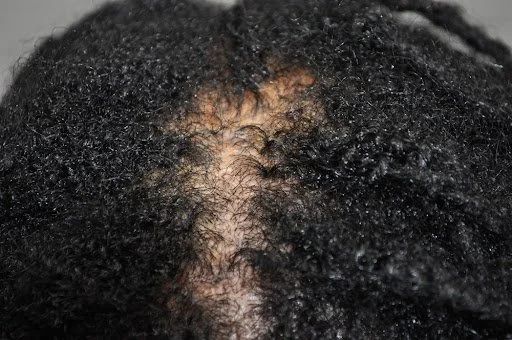
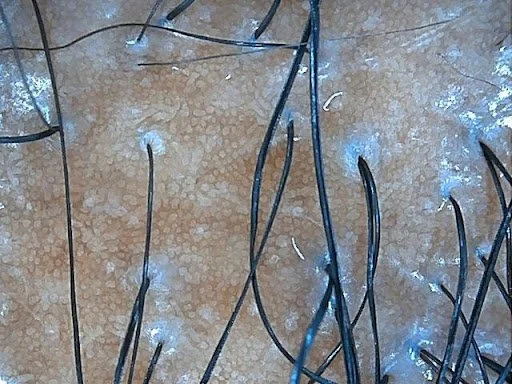
Under trichoscopic evaluation, the true clinical emergency was revealed. Clear evidence of perifollicular inflammation and early fibrosis — presenting as yellowish, textured congestion packed tightly around the base of the hair shafts. Hair strands were highly distorted, uneven in caliber, and experiencing severe follicular asphyxia. The burning and tenderness were active symptoms of an inflammatory immune cascade attacking the hair bulbs.
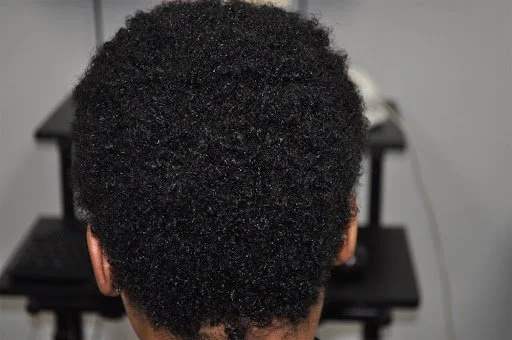
The wide, exposed path along the center and crown of the scalp was completely restored to full coverage. The hair shows vibrant coil definition, robust thickness, and complete density. By saving these follicles before they reached the point of irreversible scarring, the clinic safely guided the client into a fully restored natural taper cut.
- Dermal Base Preparation: K1 Tonic to prep the skin barrier with deep cellular lipid-balancing for a normal-to-dry scalp
- Anti-Inflammatory Dermal Blast: Intensive localized thermal mask using 50/50 Organic Turf (Turba) and Collagen, fortified with N Ampoule to force vascular blood flow, and 4ml of Fungi Activ to aggressively neutralize yeast-driven inflammation at the follicle neck
- In-Center Leave-On Topical: After removing the thermal mask, a custom-blended protective topical was applied: Special K Restorative Treatment Cream mixed with K1 Tonic and Fungi Activ
- Daily Home Care: A powerful daily compound of Special K Cream + K1 Tonic + Fungi Activ + DT Regenerator — applied continuously to repair the skin matrix, soothe burning sensations, and safely stimulate hair density between clinic visits
6. Frequently Asked Questions
- Douglas, A., Suriano, J., & Nikbakht, N. (2025). Quality of life and patient experience in Black women with alopecia. International Journal of Women's Dermatology. PMC12047871
- Williams, M. N., et al. (2025). Adjuvant use of topical metformin with standard therapies in recalcitrant central centrifugal cicatricial alopecia. JAAD Case Reports. PMC11968338
- Tolete, C., et al. (2025). Upadacitinib for treatment of recalcitrant central centrifugal cicatricial alopecia. JAAD Case Reports. PMC12887729
- Soto-Canetti, G., et al. (2025). Topical ruxolitinib in combination with oral minoxidil results in hair regrowth in a patient with CCCA and concomitant traction alopecia. JAAD Case Reports. PMC12328785
- Montefiore Medical Center Retrospective Study. (2023). A retrospective chart review of central centrifugal cicatricial alopecia patients. International Journal of Dermatology. PMC10494455
- Beach, R. (2025). Common thread in alopecia management: Styling and solution. 4th Annual Colloquium on the Black Patient in Dermatology.
- American Academy of Dermatology. (2025). Central centrifugal cicatricial alopecia: Overview, treatment, and self-care. aad.org
- Agbai, O. N., & Aguh, C. (2025). Hair loss in Black women: How dermatologists help. American Academy of Dermatology.
- Shah, S., & Alexis, A. (2010). Central centrifugal cicatricial alopecia: Retrospective chart review. Journal of Cutaneous Medicine and Surgery.
Address the root cause —
before permanent damage occurs.
The Kapyderm Hair Loss Home Treatment uses plant-based clinical Dermotricology protocols to reduce scalp inflammation, clear follicle congestion, and support regrowth — with two private expert consultations included in every kit.