Klasscolor: The Acid Color System — Permanent Color at pH 5–5.5
Klasscolor: Permanent Color at the pH of Skin
Conventional permanent color works at pH 9–11 — forcing the cuticle open to get pigment in. Laboratorios Kapyderm publishes Klasscolor as an acid coloring emulsion at pH 5–5.5, engineered by a dermotricology laboratory to deliver full gray coverage and lasting brilliance. This is the complete professional guide to the chemistry, the system, the full ingredient list, and the protocol.
Klasscolor is a conventional oxidative permanent color and contains ammonia, p-phenylenediamine (PPD) and resorcinol. The newer carton also lists ethanolamine. It is not an ammonia-free or PPD-free color and must never be presented as one. Standard sensitivity testing applies exactly as it would for any oxidative color, and the EU colorant contraindications on the carton apply in full — do not color a client with a facial rash, a sensitive, irritated or damaged scalp, or any prior reaction to hair color or to a temporary "black henna" tattoo. The full ingredient list is published further down this page. Professional use only; not for anyone under sixteen.
Laboratorios Kapyderm publishes Klasscolor as a permanent coloring emulsion formulated at pH 5–5.5 — the same range as healthy scalp skin, and well below the pH 9–11 of conventional permanent color. The stated mechanisms are a buffer effect holding pH stable across the service, and a micro-pigment structure small enough to distribute through the cortex without alkaline swelling. Kapyderm's claimed result is lasting, brilliant color with full gray coverage. It was developed over seven years of research and testing before release, and introduced to the professional market as an acid permanent color. Read the pH figure as the manufacturer's specification — the ingredient list is a standard oxidative dye system, so the number most plausibly describes the finished service state rather than the developing mixture, and Kapyderm has not yet published the technical sheet that would settle it.
- The problem conventional color creates
- What Klasscolor is — and the seven-year rule
- Color at the pH of skin — and what the label says
- The buffer effect
- Micro-pigment technology
- The collagen emulsion partnership
- The three-part Klasscolor system
- In the chair — two colorists' work
- Gray coverage, tonal range and reflect control
- The Klasscolor shade chart
- Where color meets Dermotricology
- The evidence behind the mechanism
- Klasscolor vs. the alternatives
- The client consultation
- Frequently asked questions
The problem conventional color creates
Every colorist knows the chemistry, even if it is rarely said out loud: to make permanent color last, you have to force your way in.
Healthy hair sits at a slightly acidic isoelectric point of roughly pH 3.67. The scalp maintains its own protective acid mantle at pH 4.5–5.5.[9] At that pH the cuticle scales lie flat and overlapping — the strand is smooth, reflective and mechanically resilient, and the disulfide bonds that give hair its strength remain intact.
Conventional permanent color operates at pH 9 to 11. Alkalizing agents raise the pH of the fiber so the cuticle swells and lifts, letting pigment precursors reach the cortex where oxidation locks them in. It works. It is also, structurally speaking, a controlled injury — repeated every six weeks, for years.[1]
The cuticle does not close cleanly again
Once forced open by high-alkaline chemistry, cuticle scales do not snap back into place. Alkaline pH increases the negative electrical charge on the fiber surface, raising inter-fiber friction — the mechanism behind roughness, tangling and progressive breakage across repeated color cycles. At pH 9–11 the effect extends past the cuticle’s lipid barrier into keratin denaturation in the cortex.[3]
A stripped acid mantle behaves predictably
The acid mantle is a protective film of naturally occurring acids maintained by sebum. Alkaline formulas strip it, and the downstream picture is familiar from the shampoo bowl: dryness, itching, flaking — and then paradoxical oiliness days later, as the scalp overproduces sebum to compensate.[10]
Fiber damage is cumulative
Structural change from oxidative color compounds across cycles rather than appearing at once. A client who has colored for fifteen years has a fiber history that a client on her third service does not — which is why porosity, uneven pull and early fade tend to arrive gradually rather than suddenly. This is a fiber observation, not a scalp-sensitivity claim.
The industry’s answer has always been to repair the damage afterward — bond builders, acidic rinses, post-color treatments. Laboratorios Kapyderm asked a different question: how much of it can be avoided in the first place?
What Klasscolor is — and the seven-year rule
Klasscolor is a permanent coloring emulsion developed by Laboratorios Kapyderm — the same Málaga laboratory that has spent 35+ years developing the science of Dermotricology.
That origin is the point. Klasscolor was not created by a color house that later added a scalp product. It was created by a scalp-and-skin research laboratory that decided to work on color. The brief was strict: deliver a genuinely permanent color, with full gray coverage and long-lasting brilliance, with less impact on the scalp and the fiber than conventional alkaline chemistry.
Kapyderm states Klasscolor took seven years of research and dermotricological testing before a single tube was sold. That is the standard the laboratory applies to its lines before launch, and it is why the catalog is deliberate rather than large. Worth saying out loud to a colorist who has watched the industry ship a new bond-builder every season.
Klasscolor was presented to the professional market at Expocosmética in Porto, where the Portuguese trade press covered it as an acid permanent color — introduced not as a color launch but as a dermotricological coloration.[13] It has been in professional use across Europe since.
Color at the pH of skin — and what the label says
The defining published specification of Klasscolor is simple to state: Kapyderm describes it as an acid coloration formulated at pH 5–5.5.
Read that against the numbers above. The scalp’s acid mantle sits at 4.5–5.5. Klasscolor is specified to sit inside that band — meaning the color environment and the skin environment are, on the manufacturer’s figures, essentially the same environment.
Acid color systems behave differently from alkaline ones. Rather than swelling the cuticle open, they keep the cuticle compact, depositing tone while the scales stay flat.[4] The practical consequences are the ones clients notice: more shine, a smoother hand, a conditioning rather than stripping experience.
A professional article that talks about pH without publishing the INCI is not much use, so here it is, from the physical carton (60 ml professional tube, Reg. DGFPS 1478-CS, made in Spain).
Klasscolor Coloring Emulsion: Aqua, Cetearyl Alcohol, Propylene Glycol, Glyceryl Stearate SE, Ceteareth-25, Ceteareth-33, Ammonia, Oleic Acid, Amodimethicone, Oxidised Corn Oil, Behenoyl PG Trimonium Chloride, Cetrimonium Chloride, Trideceth-12, Parfum, Stearic Acid, Lauric Acid, EDTA Tetrasodium, Sodium Hydrosulfite, Erythorbic Acid. Dye block includes p-Phenylenediamine, m-Phenylenediamine, Resorcinol, m- and p-Aminophenol and p-Toluenediamine Sulfate. The newer carton adds Ethanolamine alongside Ammonia, plus a full parfum allergen declaration.
What that means in practice. This is a standard oxidative dye system. Ammonia sits seventh on the list. So the published pH 5–5.5 figure and the ingredient list do not obviously describe the same moment — the most plausible reading is that the figure refers to the finished, enzymatically rebalanced state rather than the developing mixture. Kapyderm has not published a technical sheet resolving this, and we would rather tell you that than let you find out from the carton. Formulate and consult on the basis of the ingredient list.
The buffer effect
The mechanism Kapyderm identifies as central to Klasscolor is its buffer effect — the formula’s capacity to hold pH stable across the service rather than letting it swing.
Buffered dyeing systems are a recognized direction in cosmetic-science research, and the principle is sound: hold the environment within an optimal band and you reduce the collateral change at both surfaces.[5] Kapyderm attributes reduced itching, flaking and fiber porosity to this buffering behavior.
Reduced is not eliminated, and a buffer does not remove PPD, resorcinol or ammonia from the formula. A client with any history of reaction to hair color is contraindicated for Klasscolor exactly as she would be for any other oxidative color — the buffer effect is a fiber and comfort argument, not an allergy argument, and it must never be used to talk a reactive client back into the chair.
Micro-pigment technology
Here is the objection any experienced colorist should raise, and it is the right one: acid color has historically meant impermanent color.
That has been the accepted rule. Highly alkaline formulations achieve deep pigment penetration at the cost of structural damage. Mildly acidic formulations act more gently but have traditionally delivered a less lasting result. Gentleness and longevity have been close to a zero-sum choice.
Kapyderm’s stated answer is pigment size: pigments engineered small enough that penetrability depends less on forcing the cuticle open. They are described as distributing readily through the cortex, producing durable color that does not wash away.
Alkaline color solves penetration by changing the hair so large pigments can get in. Klasscolor’s stated approach is to change the pigment instead. It is a good argument. It is also currently the manufacturer’s argument — no independent study has published particle-size or penetration data on this formulation, and a colorist is entitled to ask to see it demonstrated on a swatch before taking it on trust.
Kapyderm notes a corresponding application characteristic that follows from the chemistry: Klasscolor does not need to be dragged through the hair. It needs to be properly saturated across the full cortex area. Technique follows formulation.
The collagen emulsion partnership
Klasscolor is described by the laboratory as achieving its result through the mixture of the coloring emulsion with the balsamic collagen emulsion — the same collagen technology used across the Kapyderm Dermotricology system.
This is where the two lines genuinely converge. Hydrolyzed proteins including collagen adsorb to the fiber surface at oxidation-damaged sites, filling cuticle fissures, reducing friction and increasing shine, with smaller peptides penetrating toward the cortex.[6][7]
Applied within a color service, that means the vehicle carrying pigment into the fiber is also conditioning the surface it passes. The conditioning is inside the color rather than applied afterward as repair — which is a real formulation difference, and a modest one: it does not make an oxidative service a non-oxidative one.
The three-part Klasscolor system
Laboratorios Kapyderm organizes Klasscolor into three components. The structure is worth knowing before you order.
The coloring emulsion carrying the micro-pigments — the core of the system. Permanent, buffered, and published at pH 5–5.5. Mixed with the balsamic collagen emulsion, it delivers tone and coverage. See the full INCI above — this is an oxidative dye system containing ammonia, PPD and resorcinol.
Permanent color services and full gray coverage, on clients who clear a standard sensitivity test and have no contraindications.
Natural tones, reds and fantasy shades, selected from the Klasscolor color chart below.
The developer paired with the coloring emulsion to drive oxidation and lock pigment into the cortex. Carried in the U.S. under the Klasscolor category.
The lightening component of the system, used where lift is required before or independent of the coloring emulsion.
The foundation protocol
Every Klasscolor service rests on the same foundation, printed on the carton itself. Learn this and you can work the line safely. It is the floor, not the ceiling — the Kapyderm Advanced Protocol builds on top of it, and that is what deeper training covers.
1 · Color. Mix the 60 ml tube with an equal quantity of cream peroxide (1:1). Process 30 minutes. Klasscolor does not need to be dragged through the hair — it needs to be properly saturated across the full cortex area. Never use a metallic bowl or implement.
2 · Emulsify and cleanse. Emulsify, rinse thoroughly, then wash with the cleansing base for colored hair.
3 · Rebalance. Finish with Enzyme Balance (Equilibrante Enzimático). This step is written into the manufacturer’s directions, not an upsell — it is where the service returns the fiber and scalp to their balanced state.
Most professional color lines end their directions at “rinse and shampoo.” Klasscolor’s directions do not end until the hair has been cleansed with a color-specific base and enzymatically rebalanced. Given the ingredient list, that final step is doing real work — and it is very likely where the published pH figure is measured.
In the chair — two colorists’ work
Formulation theory is worth what comes out of the chair. Below are two published color corrections built on the Kapyderm Advanced Protocol, one in Spain and one in the United States.
Individual results vary. These are single client outcomes achieved by experienced colorists on that client’s specific hair history, published with the colorist’s permission. They are not typical results, not a guarantee of outcome, and not retouched to our knowledge. Color correction of this kind requires trained assessment of the fiber before any chemical is applied.
Boris Soler trains beauty, hairdressing and esthetics professionals internationally for Laboratorios Kapyderm. His Málaga salon specializes in color, blondes, balayage and color correction — in the same city where Klasscolor is formulated.
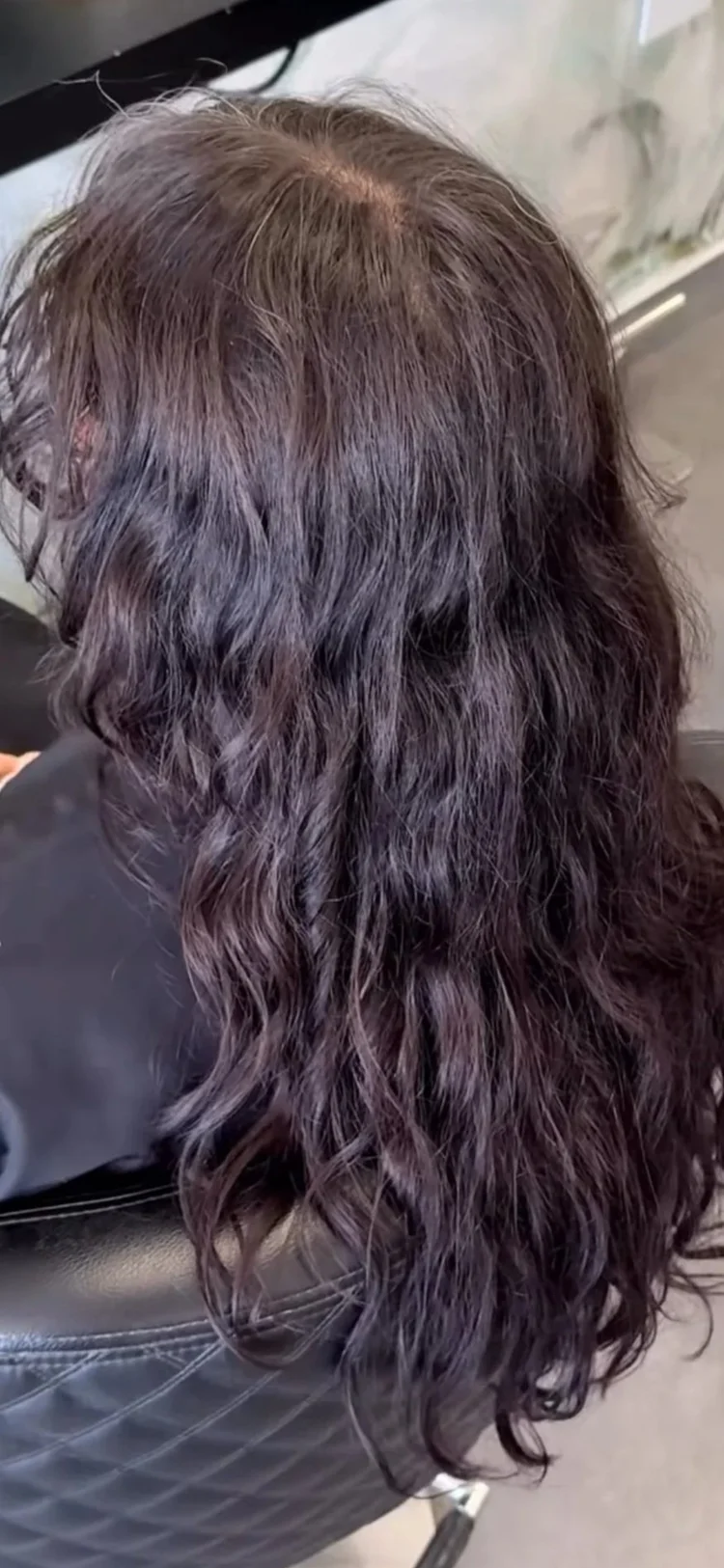
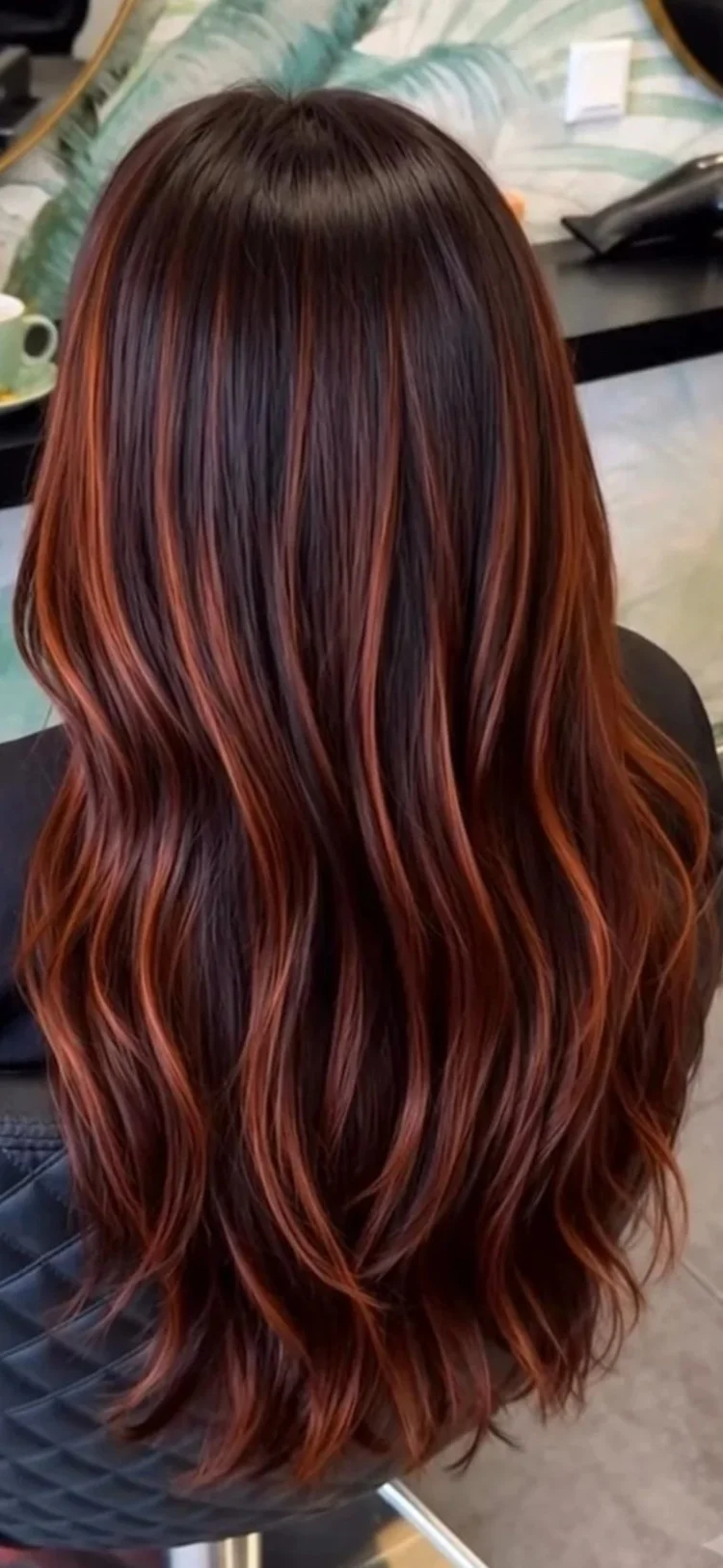
- Base build. ½ shade 4 + ½ shade 5, with 20 vol oxidant.
- Lift. Decolorization with 20 vol oxidant, with collagen in the mix.
- Tone. Shade 7.66 with 6 vol oxidant and 10% collagen.
- Rebalance. Enzyme Balance + collagen + molecular reconstructor.
- Finish. Styling techniques and blow-dry.
Read that formula again and notice what it is not. It is not “mix 1:1 and process 30 minutes.” Collagen is carried through every chemical phase — into the decolorization, and into the toner at 10% — so the conditioning is inside the chemistry rather than applied afterward. The service then closes with Enzyme Balance, collagen and molecular reconstruction.
That is the Kapyderm Advanced Protocol: the foundation on the carton, extended by technique that has to be taught. The carton tells you how to use the product safely. It cannot teach you to sequence four chemical phases on compromised hair. That is what the training is for.
And in a chair in North Carolina
Málaga is where Klasscolor is made. The more useful question for a U.S. colorist is whether it performs the same way here. The work below is from a Master in Dermotricology and cosmetologist in North Carolina who uses Klasscolor more than anyone else in the U.S. network.
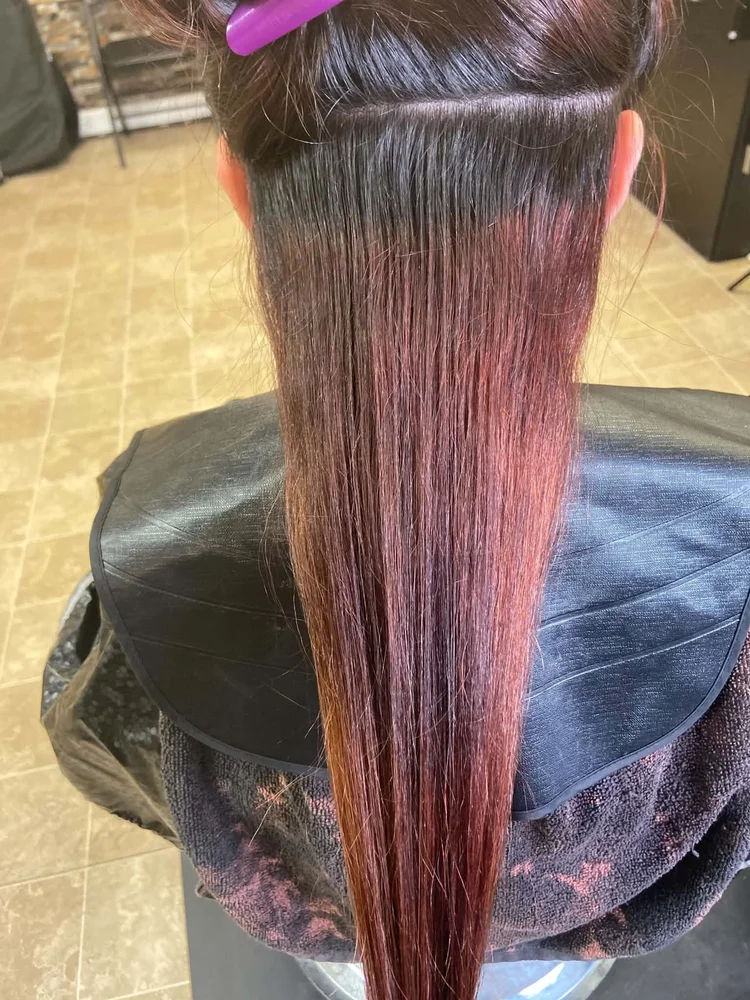
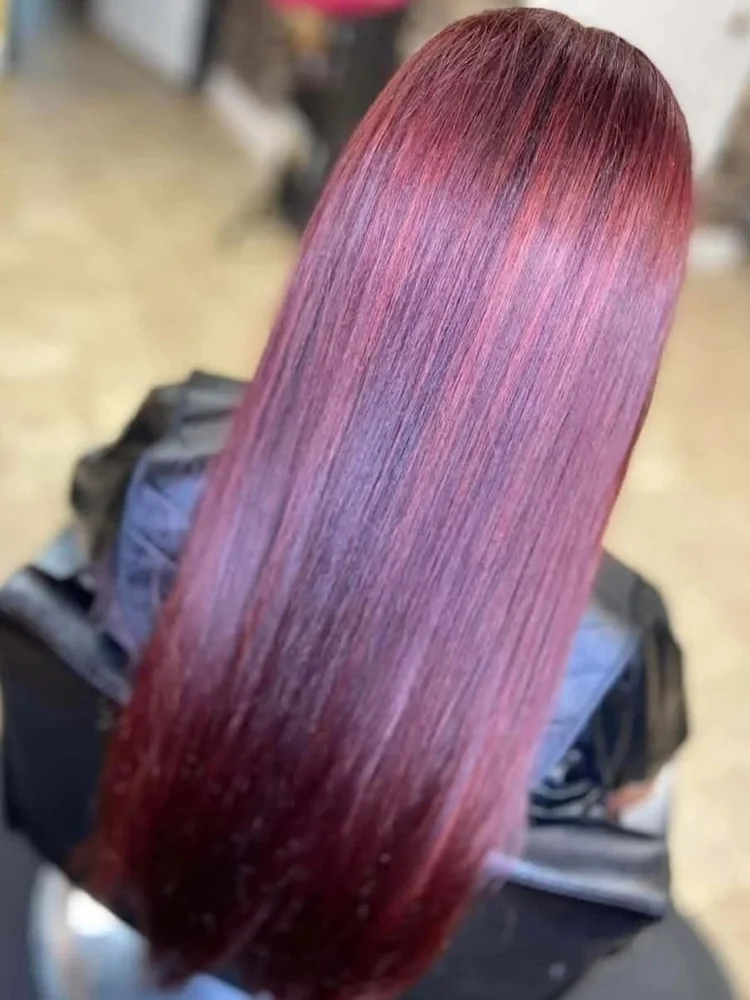
- Phase 1 — Lift and tone the highlights. Cap highlights pulled through — root first, then mid-lengths to ends to even out the lift — taken to a level 8. Toned, washed, Enzyme Balance applied, the cap removed and roughly half the water removed.
- Phase 2 — Color the whole head. Applied over the whole head for 45 minutes with 2 oz of 20-vol developer, then washed and the excess water removed.
- Finish. The closing mix — Enzyme Balance + collagen + molecular reconstructor — worked through, then blow-dried.
Formula and technique by the colorist. Techniques like this are covered in Klasscolor professional training.
A manufacturer’s own educator producing beautiful work with the manufacturer’s own line is expected. A working colorist in North Carolina producing the same standard on her own clients, week after week, is a more useful signal. She is a Master in Dermotricology as well as a colorist — which means the scalp is evaluated before the color is formulated, every time.
Gray coverage, tonal range and reflect control
The commercial question every colorist asks second: does it actually cover?
Kapyderm’s position is that intense color and long-lasting shine alongside complete gray coverage is achievable with the Klasscolor line. This is the specification that most separates Klasscolor from gentler acid and botanical alternatives, which typically concede coverage in exchange for kindness.
The line spans natural tones, reds and fantasy shades. Kapyderm states these tones are achieved without the unwanted reflects — the pinks, oranges and greens that pull through on other systems. For a working colorist, predictability is worth as much as the shade itself.
Both of those are manufacturer claims rather than independently tested results, and both are easy to check yourself: a swatch on 100% gray, processed to the carton directions, washed ten times and assessed under salon light will tell you more than any article can.
The Klasscolor shade chart
The Klasscolor Coloring Emulsion spans more than ninety shades across nine tonal families — from naturals and ashes through mahogany, red, copper, violet-tobacco and gold, up to super-lighteners, platinum and fantasy. The numbering follows the international tone/reflect convention (the number before the point is the depth, the numbers after are the reflects), so it maps cleanly onto the formulation logic you already use.
Shade chart as published by Laboratorios Kapyderm. Shade selection, mixing ratios and developer volumes are covered in Klasscolor professional training. Always confirm against the current physical chart before formulating.
Where color meets Dermotricology
For a general salon, Klasscolor is a color line with an interesting formulation argument. For a Kapyderm practice, it does something more specific: it puts color and scalp care under one roof, formulated by one laboratory.
Consider the client already in the chair. She is there for a scalp routine — thinning at the part line, or a scalp being brought back to comfort. She is also, like many women over forty, coloring her gray. Bringing that color in-house means the same practitioner is assessing the scalp before the color goes on, rather than the two happening in separate buildings with no one comparing notes.
Any history of reaction to hair color — contraindicated, full stop. Klasscolor contains PPD and resorcinol and carries the standard EU colorant warning: do not color if the client has a rash on the face, a sensitive, irritated or damaged scalp, or has ever reacted to hair color or a temporary “black henna” tattoo. The acid pH does not change this. That client is not a color candidate.
Active scalp disease or open lesions — not a color candidate until resolved. Treat first, color after, and refer to a physician where appropriate.
The high-porosity, over-processed client — years of alkaline cycling. This is where the collagen-through-every-phase technique earns its place; pair with the reconstruction work already in your toolkit.
The gray-coverage client — the coverage claim is the line’s strongest commercial argument. Test it on a swatch before you promise it.
The Dermotricology client who colors — the practical benefit is one practitioner assessing the scalp and formulating the color, with a full history in one place.
Color selection in a Dermotricology practice follows the same discipline as tonic selection: it begins with the scalp, not the shade. A trichoscopy evaluation with the Kapykon camera shows the actual presentation — sebum load, congestion, scaling, irritation — before any color service is planned. Where the evaluation shows a compromised or irritated barrier, the scalp comes first and the color waits. Trichoscopy is a cosmetic evaluation, not a diagnostic procedure, and anything suggesting a medical condition goes to a physician.
Standard sensitivity testing applies to every color service without exception. Klasscolor is professional use only, is not for anyone under sixteen, and carries the standard EU colorant contraindications in full.
The evidence behind the mechanism
Kapyderm makes specific claims about how Klasscolor behaves: that alkaline pH damages the fiber and the scalp, that keeping the service acidic protects both, that a buffer holds the environment stable, and that collagen fills and seals the cuticle. Each is a mechanism the independent, peer-reviewed literature has examined directly. Here is what that literature says, separate from anything Kapyderm publishes.
Supported
Peer-reviewed cosmetic-science work establishes that at pH 9–11 keratin denatures, disulfide and peptide bonds cleave, and the lipid layer holding the cuticle scales dissolves — lifting the scales and leaving the fiber porous. Proteomic analysis confirms the damage reaches the cortex, not just the surface.[1][3][12]
Supported
The cosmetic-chemistry literature is explicit: low pH keeps cuticle scales lying flat and sealed, producing smoothness and shine, while high pH swells and opens them. This is the same acid-close / alkaline-open mechanism every permanent-color system relies on — and the reason a post-service acidic step is standard practice.[2][4]
Supported as a research direction
Buffered dyeing systems — formulations using buffer chemistry to hold pH within an optimal band across the service — are identified in the literature as a promising route to reconciling color performance with fiber health. The principle Kapyderm names is a recognized area of cosmetic-science research, not a proprietary assertion.[5]
Supported
Hydrolyzed proteins including collagen adsorb to the fiber surface through electrostatic attraction to oxidation-damaged sites, filling cuticle fissures, reducing friction and increasing shine; smaller peptides penetrate toward the cortex. A 2024 study on collagen peptides specifically measured improvements in hair-shaft elasticity and gloss.[6][7][8]
Supported
Dermatology literature confirms the scalp shares the facial skin’s structure and acid mantle (pH ~4.5–5.5), that lipid-processing enzymes function optimally only in that acidic range, and that an alkaline shift raises transepidermal water loss and compromises the barrier.[9][10][11]
What the literature does not show
These studies validate the mechanisms Klasscolor is built on — they are not studies of Klasscolor. No independent trial has published head-to-head data on this formulation’s finished pH, wash-fastness or gray coverage, and none of them speaks to the ammonia, PPD and resorcinol on the ingredient list. The mechanism is well-evidenced; product-specific proof is the manufacturer’s to supply.
Klasscolor vs. the alternatives
The table below compares published specifications and established chemistry as of August 2026. Formulas and ranges change without notice, and no head-to-head trial of these systems exists — this is a comparison of how each category is built, not of how well any of them performs.
| Capability | Klasscolor | Conventional permanent | Botanical / semi-permanent |
|---|---|---|---|
| Published operating pH | 5–5.5 per manufacturer | 9–11 — alkaline | Varies; typically mild |
| Oxidative dye system | Yes — ammonia, PPD, resorcinol | Yes | Generally no |
| Permanence | Permanent — does not wash out | Permanent | Fades with washing |
| Gray coverage | Full, per manufacturer | Full | Partial at best |
| Unwanted reflects | Controlled, per manufacturer | Variable | Common |
| Conditioning within the service | Collagen emulsion in the mix | Separate post-step | Variable |
| Post-service protocol | Three steps — enzymatic rebalancing written into the directions | Typically “rinse and shampoo” | Varies |
| Sensitivity testing required | Yes — contains PPD | Yes | Check the specific product |
| Origin | Dermotricology laboratory | Color houses | Botanical brands |
The client consultation
Most clients do not know color has a pH, and the explanation lands best when it is short and physical rather than technical.
“Your scalp is skin — it has a natural acidity that protects it, right around a pH of five. Most permanent color runs at nine to eleven. That’s what forces the hair open so the color can get in.”
“The line I use is formulated to sit much closer to that natural pH, and the pigments are made small enough to get in without prying the cuticle as far open — so you get full coverage and it doesn’t wash out, with less of the roughness that builds up over years of coloring.”
“It’s still a permanent color, so we’ll do your sensitivity test the same as always — that part never changes.”
Klasscolor is a professional cosmetic color system. It is not a treatment for any scalp disease and must never be presented as one, and it is not a hypoallergenic or low-allergen option — it contains PPD. Do not tell a client that this color is safe for her because it is acidic. Clients presenting with active dermatitis, open lesions, a known scalp condition or any history of color reaction should be evaluated, and referred to a physician where appropriate, before any color service.
Frequently asked questions
- pH and fiber damage — Gavazzoni Dias MFR. Hair cosmetics: an overview. Int J Trichology. 2015;7(1):2–15. PMC4387693.
- pH and the hair — Dias MFRG, de Almeida AM, Cecáto PMR, et al. The shampoo pH can affect the hair: myth or reality? Int J Trichology. 2014;6(3):95–99.
- Cortex-level damage — Mechanisms of impairment in hair and scalp induced by hair dyeing and perming and potential interventions. PMC10232955. 2023.
- Equilibrium pH & fiber structure — Effect of equilibrium pH on the structure and properties of bleach-damaged human hair fibers. PMC7757171. 2021.
- Buffered dyeing systems — Sapianov. Hair color chemistry: how pH affects structure and quality. 2024 — identifies buffer dyeing systems as a research direction.
- Protein film / cuticle repair — Interaction of polypeptides with hair in different reducing environments. Int J Biol Macromol. 2026.
- Collagen peptides & hair — The impact of AP collagen peptides on hair shaft elasticity and gloss. 2024.
- Protein substantivity — CIR Expert Panel. Safety Assessment of Hydrolyzed Collagen and related hydrolyzed proteins as used in cosmetics. Re-review.
- The acid mantle — From Discovery to Modern Understanding: The Acid Mantle in Dermatology. J Integrative Dermatology. 2024.
- Skin surface pH & barrier — The Origin, Intricate Nature, and Role of the Skin Surface pH in Barrier Integrity, Eczema, and Psoriasis. Cosmetics (MDPI). 2025;12(1):24.
- Acid mantle & barrier enzymes — Acid mantle: what we need to know. Indian J Dermatol Venereol Leprol. 2023.
- Reference text — Robbins CR. Chemical and Physical Behavior of Human Hair. 5th ed. Springer.
- Product & launch — Laboratorios Kapyderm, Klasscolor product specifications and physical carton (Reg. DGFPS 1478-CS), from which the ingredient list on this page is transcribed; Portuguese trade press coverage of the Klasscolor launch at Expocosmética, Porto.
The peer-reviewed sources above concern the underlying mechanisms of hair and scalp chemistry — pH, protein substantivity and barrier function — and are independent of Laboratorios Kapyderm. They substantiate the science Klasscolor is built on, not the finished product’s performance, which is the manufacturer’s to demonstrate. The pH specification and the ingredient list have not been reconciled in a published technical sheet, and this article states that rather than choosing between them. Last reviewed August 2026.
Learn the Advanced Protocol
The carton teaches you the foundation. The Kapyderm Advanced Protocol — sequencing collagen through every phase, correcting compromised hair, finishing with the fiber in better condition — is taught, not printed. If you’d like to discuss Klasscolor training for your salon, get in touch.